
 EN
EN
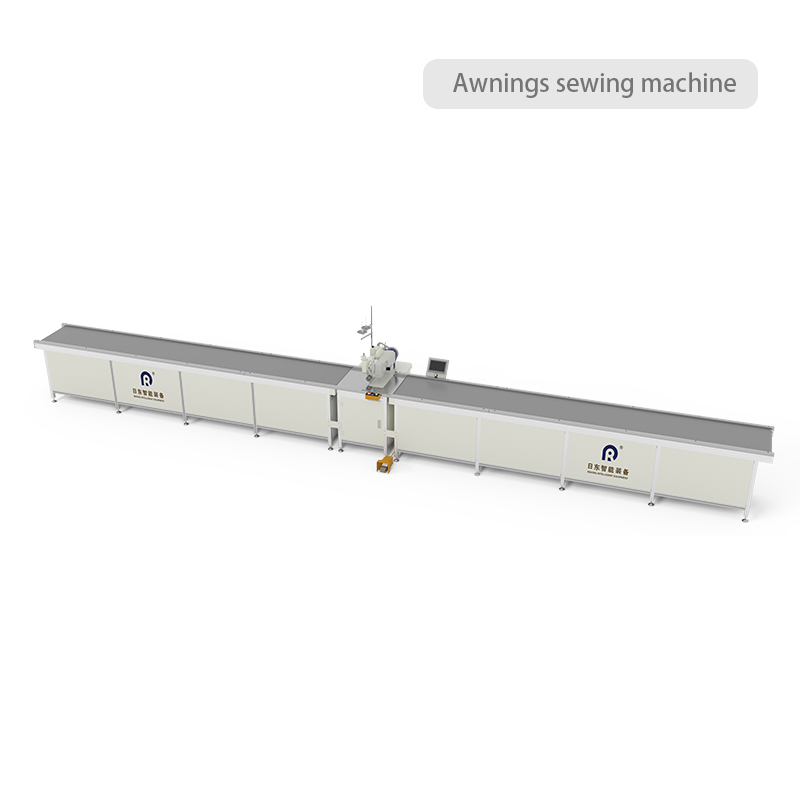
How Awnings Sewing Machines Enhance Durability in Industrial Applications
Rising Demand for Long-Lasting Awning Fabrics and Machine Response
The industrial world needs awning fabrics these days that can handle at least a decade of sun beating down on them plus wind speeds reaching up to 60 miles per hour. Because of this need, most manufacturers have started using special sewing equipment for awnings. According to Textile Engineering Journal from last year, around three quarters of companies made this switch after 2022 began. What makes these machines different? They tackle those weak spots in fabric with stitches reinforced three times over, automatically adjust how tight the threads are as they work, and come equipped with powerful 400 watt motors strong enough to go through eight layers of thick canvas material without breaking a sweat.
A 2024 industry analysis of commercial awning producers found operators using industrial-grade machines reduced seam failures by 63% compared to standard equipment.
Design Principles That Maximize Stitch Longevity in Heavy-Duty Use
Premium awnings sewing machines incorporate aircraft-grade aluminum frames to minimize vibration—a critical factor since 92% of seam failures originate from inconsistent needle penetration (Industrial Textile Quarterly 2023). Key engineering features include:
| Feature | Performance Impact |
|---|---|
| Dual servo-motors | Maintains 0.1N tension accuracy across 12-hour shifts |
| Rotary hook system | Reduces thread breakage by 41% in vinyl materials |
| Pressure-sensitive foot | Automatically adjusts to fabric thickness variations |
Case Study: Commercial Manufacturers Achieving Lower Failure Rates
A Florida-based awning company replaced conventional machines with industrial models featuring automatic bobbin monitors. Over 18 months, warranty claims dropped from 14% to 3% of production, average repair intervals extended from 90 to 320 operating hours, and production throughput increased 22% due to reduced downtime.
The Shift Toward Automation for Consistent, Durable Seams
Today's industrial systems come equipped with IoT sensors capable of making around 240 tension adjustments every single minute, which is about 15 times faster than what manual machines can achieve. The benefits of this automation are pretty clear when it comes to product longevity. A recent study from the 2024 Fabric Stress Report looked at both automated and manual stitching methods. What they found was pretty impressive: seams created by automated systems resisted slipping almost 83% better than traditional ones. Plus there was a noticeable improvement in how fabrics handled UV exposure too, showing roughly 57% better tolerance. And let's not forget about moisture issues either these automated processes actually reduced thread expansion problems caused by moisture by nearly 30%. These numbers tell a story about why so many manufacturers are switching over to automated solutions nowadays.
Selecting Machines Based on Fabric Load Capacity and Operational Stress
Operators should prioritize machines offering a minimum 6kN stitch locking force, 5mm–12mm adjustable stitch length, and variable speeds between 800–1,100 stitches per minute. For high-stress environments like marine applications, industrial sewing machines with titanium-coated needles demonstrate 89% longer service life when processing saltwater-exposed fabrics compared to standard components.
Critical Factors Affecting Stitch Consistency in High-Volume Production
Impact of Vibration and Tension Fluctuations on Seam Integrity
Operational vibrations and thread tension variability contribute to 42% of seam defects in high-output environments (textile engineering authorities). Advanced models counter this with vibration-dampening frames and microprocessor-controlled tension systems that adjust 1,200 times per minute, maintaining stitch uniformity even at 2,500 RPM.
Data Insight: 68% Reduction in Seam Failures with Precision-Controlled Machines
Manufacturers adopting servo-motor driven stitching systems report 68% fewer seam failures compared to traditional clutch motor machines (Textile Production Quarterly 2023). These systems enable real-time adjustments for fabric thickness and thread elasticity—critical when working with solution-dyed acrylics and other heavy-duty awning materials.
Balancing Speed and Stitch Quality in Industrial Environments
| Production Speed (RPM) | Recommended SPI | Thread Breakage Risk |
|---|---|---|
| 1,500–2,000 | 10–12 | Low |
| 2,000–2,500 | 8–10 | Moderate |
| 2,500+ | 6–8 | High |
Maintaining this balance requires precision gear timing and automated feed mechanisms. Facilities implementing SPI monitoring systems achieve 93% stitch consistency across 8-hour production shifts.
Ensuring Long-Term Performance Through Machine Calibration
Biweekly tension system calibration preserves ±2% stitch length accuracy in heavy fabric applications. Quarterly maintenance of hook timing and presser foot pressure prevents the 0.15mm alignment drifts that accumulate during 10,000+ stitch cycles, ensuring reliable performance over 5-year equipment lifespans.
Optimal Sewing Techniques and Seam Reinforcement Strategies
Modern awnings sewing machines employ proven reinforcement strategies to create seams that withstand years of sun, wind, and mechanical stress. Industrial operators achieve 2–3× longer awning lifespans by combining advanced stitching patterns with material-specific engineering.
Reinforcing Seams with Reverse and Overlapping Stitches
Reverse stitching at seam endpoints prevents unraveling under tension, while overlapping stitches distribute stress across 30–40% more thread surface area. Manufacturers using double-needle bar machines report 58% fewer seam separations in awning corners after 5 years (Field Test Data 2023).
Lockstitches as the Foundation for Rugged, Secure Joints
The interlocking thread design of ISO 4915:2021-compliant lockstitches resists lateral shifting, maintaining seam alignment even when awning fabrics expand or contract. This stitch type accounts for 76% of commercial awning production due to its balanced strength-to-flexibility ratio.
Balancing Flexibility and Strength in Seam Design
Optimal awning seams allow 15–20% material stretch without compromising integrity. Industry leaders achieve this through graduated stitch densities—tighter stitches (8–10 SPI) in high-stress zones transitioning to looser patterns (5–6 SPI) in flexible areas.
Edge Finishing: Binding vs. Overlocking for Maximum Longevity
| Technique | Best For | Average Lifespan Extension |
|---|---|---|
| Bias Tape Binding | Vinyl/PVC Awnings | 18–24 months |
| 3-Thread Overlock | Polyester Blends | 30–36 months |
The CDC’s garment seam guidelines confirm overlocked edges reduce fraying by 89% compared to raw edges in accelerated weathering tests.
Machine Settings, Needle, and Thread Selection for Heavy-Duty Fabrics
Calibrating Tension and Stitch Length for Canvas, Vinyl, and Polyester
The durability of industrial awning sewing machines comes from adjusting stitch settings based on what kind of fabric is being used. For canvas materials, most operators set their machines between 6 to 8 stitches per inch with around 15 to 20 Newtons of tension force to keep things from puckering up during stitching. Vinyl works better when we go higher, typically 8 to 10 stitches per inch combined with about 12 to 15 Newtons tension for proper shape retention. Working with polyester blends presents another challenge altogether since these fabrics need really careful tension control. If the threads are too tight, seams tend to warp and twist; but if they're too loose, water will seep through those gaps eventually ruining the product's weather protection properties. According to recent industry reports from last year, companies that invest in automatic tension adjustment systems see roughly a 40 percent drop in broken threads because these smart machines can sense fabric thickness changes as they work along.
Matching Needle Gauge and Thread Weight to Fabric Density
Heavy-duty awning fabrics follow a strict needle-thread proportionality rule:
| Fabric Density (oz/yd²) | Needle Size (Metric) | Thread Weight (Tex) |
|---|---|---|
| 10–14 (Light Canvas) | 100–110 | 40–60 |
| 15–20 (Marine Vinyl) | 110–120 | 60–80 |
| 21+ (Architectural Polyester) | 120–130 | 80–100 |
A 2024 Textile Engineering Report emphasizes that mismatched combinations cause 62% of premature seam failures, with undersized needles increasing thread friction by 3.2×.
Using UV-Resistant Threads and Coated Needles to Prevent Fraying
UV-resistant polyester threads (e.g., Tenara®-type) extend awning lifespan by 5–7 years compared to standard threads in accelerated weathering tests. Nickel-coated GDx5 needles reduce friction temperatures by 18°C (32°F) during high-speed stitching, preventing synthetic fabric melting.
Key Mechanical Factors in Sewing Machine Suitability for Heavy Fabrics
Machines used in industrial awning production need pretty strong presser foot pressure, around 50 to 80 Newtons per square centimeter, to work with multiple layers of fabric without issues. They also come equipped with double feed dogs that have teeth at least 1.8 millimeters tall, which helps reinforce stitches properly. Another important component is the built in air system that keeps needles cool when running nonstop for 12 hours straight. All these design elements together cut down on how often maintenance is needed by about two thirds. At the same time, they keep stitch quality consistent within a tenth of a millimeter even after thousands of cycles each day. This means manufacturers can run their operations longer between service stops without sacrificing product quality.
FAQ
What is the importance of using industrial awning sewing machines?
Industrial awning sewing machines are crucial for producing durable and long-lasting awning fabrics. They offer reinforced stitching, powerful motors, and automatic adjustments to handle heavy-duty materials and varying conditions without compromising seam quality.
How do industrial machines reduce seam failures?
Industrial machines often incorporate advanced features like dual servo-motors, rotary hook systems, and pressure-sensitive feet. These features ensure consistent stitch quality, reduce thread breakage, and adapt to fabric thickness variations thus lessening seam failures significantly.
Why is automated stitching preferred over manual methods?
Automated stitching systems provide rapid tension adjustments, leading to superior seam resilience compared to manual methods. They improve fabric tolerance to UV exposure, moisture resistance, and overall seam durability.
What are the recommended machine settings for heavy-duty fabrics?
For heavy-duty fabrics, machines should feature minimum 6kN stitch locking force, adjustable stitch length between 5mm to 12mm, and speed ranging from 800 to 1,100 stitches per minute. Using titanium-coated needles is recommended for high-stress applications.
How can machine calibration affect long-term performance?
Regular calibration of tension systems and maintenance during extensive stitch cycles ensures stitch accuracy and prevents alignment drift. This preserves optimal machine performance over many years.
Table of Contents
-
How Awnings Sewing Machines Enhance Durability in Industrial Applications
- Rising Demand for Long-Lasting Awning Fabrics and Machine Response
- Design Principles That Maximize Stitch Longevity in Heavy-Duty Use
- Case Study: Commercial Manufacturers Achieving Lower Failure Rates
- The Shift Toward Automation for Consistent, Durable Seams
- Selecting Machines Based on Fabric Load Capacity and Operational Stress
-
Critical Factors Affecting Stitch Consistency in High-Volume Production
- Impact of Vibration and Tension Fluctuations on Seam Integrity
- Data Insight: 68% Reduction in Seam Failures with Precision-Controlled Machines
- Balancing Speed and Stitch Quality in Industrial Environments
- Ensuring Long-Term Performance Through Machine Calibration
- Optimal Sewing Techniques and Seam Reinforcement Strategies
- Reinforcing Seams with Reverse and Overlapping Stitches
- Lockstitches as the Foundation for Rugged, Secure Joints
- Balancing Flexibility and Strength in Seam Design
- Edge Finishing: Binding vs. Overlocking for Maximum Longevity
- Machine Settings, Needle, and Thread Selection for Heavy-Duty Fabrics
- FAQ