
 EN
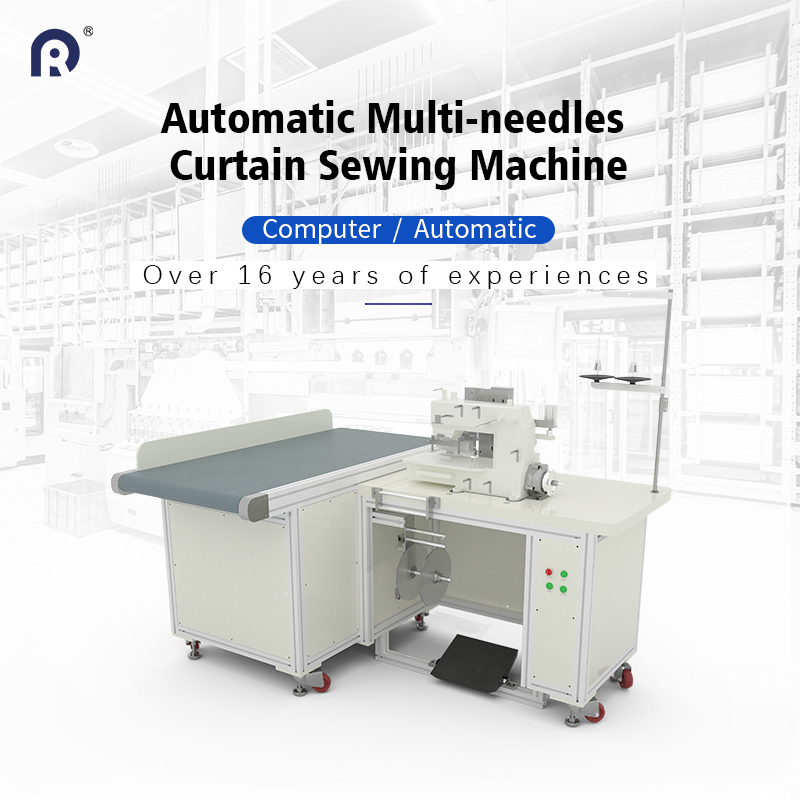
A Different Way to Think About Curtain Making
The idea of making curtains without a sewing machine sounds like a DIY hack for home decorators. But in a manufacturing context, it's something else entirely. It's about production methods that don't rely on threaded seams—approaches that are faster, more consistent, and better suited to certain types of products.
The textile industry has been moving away from traditional sewing for years, not because sewing is bad, but because alternative joining methods offer advantages that matter in specific applications. For curtain and roller blind production, the primary alternative is heat welding—using controlled heat and pressure to fuse fabric layers together without a single stitch.
The Methods That Replace Sewing
Several techniques allow curtain production without traditional sewing machines. Each has its place.
Heat welding is the most common alternative in commercial production. It uses heated elements or ultrasonic energy to melt and fuse synthetic fibers at the seam. The result is a joint that's as strong as the base material, with no needle holes and no thread to wear out. Heat welding works best with fabrics that have a significant synthetic content—polyester, PVC, nylon, and similar materials.
Ultrasonic welding is a variation that uses high-frequency vibrations to generate heat directly within the fabric. It's particularly effective for materials that are sensitive to external heat sources. The ultrasonic method produces clean, precise seams with minimal material distortion.
Adhesive bonding uses industrial adhesives to join fabric layers. Modern adhesives are formulated to remain flexible and durable over the life of the product. While not as strong as welded seams for most applications, adhesive bonding can be effective for certain product types and materials.
Mechanical fastening—using clips, grommets, or other hardware—is another no-sew approach. This is more common in finished products than in panel assembly, but it's worth noting as part of the broader no-sew landscape.
Where Welding Beats Sewing in Production
The comparison between welding and sewing isn't abstract. It plays out on shop floors every day.
| Aspect | Sewing | Welding |
|---|---|---|
| Seam strength | Limited by thread | Matches base fabric |
| Needle holes | Yes - potential failure points | None |
| Water resistance | Compromised by holes | Complete seal |
| Visual quality | Visible stitches | Clean, invisible joint |
| Operator skill required | High | Moderate |
| Production speed | Variable | Consistent |
For outdoor shading products—zip screens, exterior roller blinds, awning fabrics—the waterproof advantage of welding is critical. A stitched seam on an outdoor product is a potential entry point for water, which can degrade the fabric and reduce the product's lifespan. Welded seams eliminate that risk.
There's also the question of seam strength. A welded joint is homogeneous with the base material. A stitched joint, by contrast, has perforations that weaken the fabric around each needle hole. Under tension, a stitched seam can tear along the needle holes. A welded seam fails only when the base material fails.
The Practical Reality of No-Sew Production
Making curtains without a sewing machine doesn't mean making curtains without equipment. Heat welding machines are specialized pieces of equipment that require proper setup, maintenance, and operator training. They're not a replacement for sewing in every situation—they're an alternative for specific applications.
The suitability of no-sew production depends on three factors: fabric type, product application, and production volume.
Fabric type is the most important. Welding only works with materials that can be fused—typically synthetics. Natural fibers like cotton and linen don't weld. For those materials, sewing remains the only viable joining method.
Product application matters because different products have different performance requirements. A roller blind that will be used indoors doesn't need a waterproof seam. The same blind used outdoors does. The performance requirements determine whether welding offers enough advantage to justify the investment.
Production volume influences the economics. Welding equipment represents a capital investment. That investment pays off when the production volume is sufficient to amortize the equipment cost across many units. For low-volume custom production, the economics may favor sewing.
A Case From the Field
A manufacturer in southern Europe that produces both indoor and outdoor shading products made the switch to welding for their outdoor line a few years ago. The decision wasn't driven by a desire to eliminate sewing machines. It was driven by product performance data.
Their outdoor roller blinds were coming back with seam failures at a rate that was affecting their reputation. The failures weren't catastrophic—the seams weren't falling apart completely—but the stitch holes were enlarging over time, allowing water penetration that degraded the fabric. The manufacturer tried different threads, different stitch patterns, and different fabric treatments. Nothing solved the problem.
They switched to welded seams for the outdoor products. The seam failures stopped. The warranty claims dropped. The customers noticed the difference in quality.
The interesting part: they kept sewing for their indoor products. Sewing was cheaper and faster for those applications, and the performance requirements didn't justify the extra cost of welding. They now use both methods, choosing the right one for each product type.
What This Means for Manufacturers
The ability to make curtains without a sewing machine is more than a curiosity. It's a production option that offers real advantages for certain products and applications.
For manufacturers producing outdoor shading, zip screens, or any product where seam integrity and weather resistance matter, welding deserves serious consideration. For those producing indoor curtains with natural fibers, sewing remains the practical choice.
The key is matching the method to the application rather than assuming one approach works for everything. The curtain and blind industry is diverse, and the production methods should reflect that diversity.
Companies like Ridong have been manufacturing both sewing and welding equipment for the sunshade industry for over two decades, with installations across more than eighty countries. Their experience across both methods offers a useful perspective for manufacturers weighing their options.


