
 EN
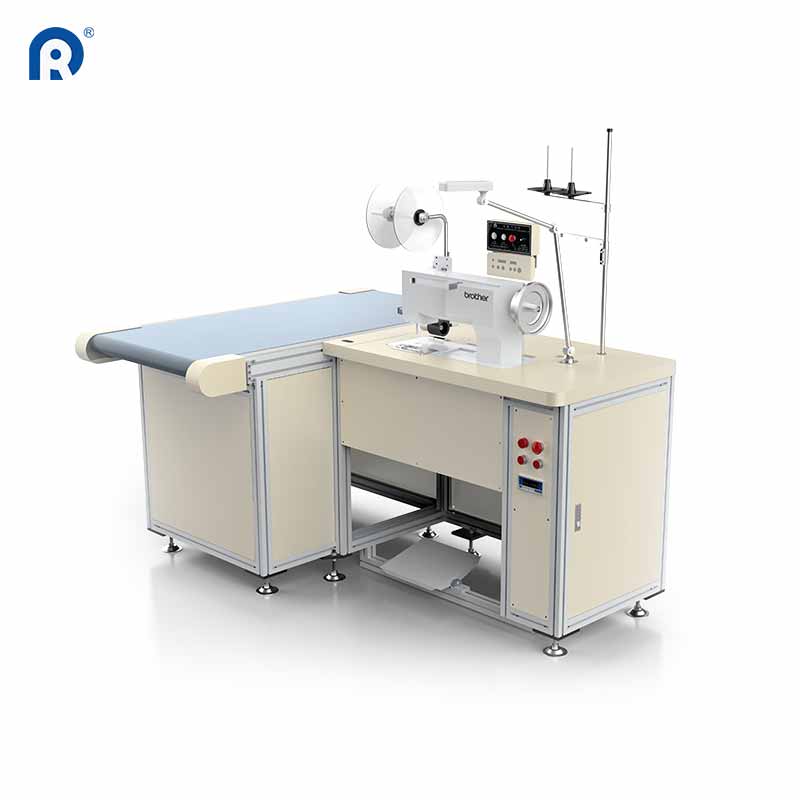
The Real Cost of “Close Enough” Is Not on the Cut Ticket
Walk onto the floor of a curtain shop still running manual cutting and the sound is familiar: the drag of a tape measure, the scratch of chalk, the crunch of a rotary trimmer going slightly off line on the third panel of the shift. Nobody plans to cut a 2,400 mm blackout panel at 2,396 mm. It happens because a tape reads differently at arm’s length, because the fabric shifts under the weight of the roll, because the person marking has done the same motion nine hundred times and the nine hundred and first gets a little sloppy.
The cost does not show up as a line item called “bad cutting.” It shows up as fabric that disappears from inventory faster than the work order predicts. It shows up as a sewing station waiting while a panel gets remeasured and rerun. One production manager at a shade manufacturer tracked rework across two identical lines and found the manual line generating roughly four times the rework of the automated line installed six months earlier. The operators were not the problem. The problem was that a 3-meter cut with a handheld method has no repeatable reference point. Every panel is a fresh negotiation between the operator’s eye, the tape, and the fabric’s willingness to stay square.
That is where an automatic curtain cutting machine changes the terms of the conversation. Not by making the blade sharper, but by removing the variable of human placement from the cut line.
What the Machine Actually Removes From the Workflow
The sales pitch usually talks about speed. Speed is real, but it is not the most interesting thing the equipment does. The more consequential change is the collapse of the measurement and cutting steps into a single sequence.
Manual cutting of a curtain panel typically runs through six or seven distinct physical actions: unroll, measure, mark, re-measure to double-check, position under the blade, cut, stack. Each handoff between actions is a chance for a few millimeters to slip in. An automatic system handles measurement and positioning as part of the same motion that drives the blade. There is no gap between “where the mark says” and “where the blade goes” because the same controller governs both.
The practical output is not just faster cutting. It is first-panel-to-last-panel consistency. A study on automatic fabric cutting for small and mid-scale textile operations reported cutting speed improvements alongside a measurable drop in fabric waste caused by cutting errors. The waste reduction piece matters more than the speed number for a curtain operation, because curtain fabric is not cheap. A blackout composite or a wide-width linen blend can carry a material cost that makes a miscut feel like throwing a finished panel in the bin.
Blackout Fabric, Sheer Voile, and the Edge That Fails Later
Curtain fabric is not a single material with a single cutting behavior. It is a range, and the range is exactly where manual cutting and generic cutting approaches start to break down.
Blackout fabric is usually a coated or densely woven composite. The light-blocking performance depends on the integrity of that coating or weave right up to the cut edge. A crushed or dragged blade can crack a coating microscopically at the edge. The panel looks fine on the table. Six months later, light finds the fracture line, or the coating starts to lift after a cleaning cycle. The failure is not in the fabric itself. It is in the cut.
Sheer voile and lightweight polyester present the opposite problem. They fray. A rotary blade slices cleanly through stable woven cotton, but on a loose weave or a thermoplastic synthetic, the cut edge sheds fibers and the panel starts looking tired before it is even hung.
This is where the choice of cutting head becomes a technical decision rather than a preference. The three common automatic cutting methods behave differently at the edge:
| Cutting method | Best fit for curtain fabrics | Edge result | Typical limitation |
|---|---|---|---|
| Rotary blade | Stable wovens, cotton blends, some blackout composites with tight construction | Clean mechanical cut, minimal fiber pull | Does not seal thermoplastic edges; fraying risk on loose weaves |
| Ultrasonic | Polyester, acrylic, coated blackout, sheer synthetics prone to fraying | Cut and sealed in one pass through high-frequency vibration; no fray | Slower per meter than rotary; not ideal for every natural fiber |
| Laser | Thin thermoplastics, limited single-ply work | Sealed edge via localized melt | Heat-affected zone, potential charring or yellowing on light fabrics, higher energy and maintenance load |
The distinction is not academic. Matic, a cutting equipment maker, puts it directly: fabrics that fray need ultrasonic, fabrics that do not fray are better served by rotary for speed and cost, and crush cutting sits between the two for materials that need pressure-based sealing rather than slicing. A shop running mostly blackout roller shade fabric and a shop running mostly linen drapery panels are not solving the same cutting problem, and a machine that cannot be configured for both is only half a solution.
A Factory Case Where the Defect Rate Told the Story
A curtain and shade factory in Colombia replaced three manual cutting stations with a single ultrasonic cutting line. The motivation was not labor reduction. The finishing department was drowning in edge-related defects. Panels were coming off the manual tables with frayed edges, inconsistent seam allowances, and blackout edges that failed light-leak checks after assembly.
After the switch, the edge-finishing defect rate dropped from roughly 4.2% to 0.3%. That is not a marginal improvement. It is a change in what the downstream sewing and finishing teams spend their day doing. When the cut edge arrives sealed and dimensionally consistent, the sewing operator is not compensating for the cut. The operator is sewing.
The same factory also found that the shift did not eliminate jobs. It reassigned them. The people who had been wrestling fabric onto manual tables moved into finishing, inspection, and setup roles. The machine absorbed the repetitive positioning work; the human work moved to where judgment still mattered.
What “Quality” Means at the Cut Line, and How to Measure It
The curtain industry does not have a single universal tolerance printed on a wall, but the logic of acceptance is borrowed from the broader textile quality system. The four-point inspection system, standardized under ASTM D5430, assigns penalty points based on defect size and calculates points per 100 square yards to determine whether a roll or shipment is first quality. That framework exists because fabric arrives with variability. The question is what the cutting operation does with that variability.
A manual cutter who sees a flaw or a width irregularity adjusts by eye. The adjustment is invisible on the work order. An automatic system can be programmed to work around a mapped defect or to hold a dimensional band across the full run. The difference is traceability. When a panel comes back from a customer, a shop with automated cut data can trace the panel to a cut file, a roll, and a timestamp. A manual shop has a chalk mark and a memory.
That traceability is not a bureaucratic nicety. It is the difference between fixing a process and re-cutting a panel and hoping the next one lands better.
The Payback Question, Answered Without the Hype
Automatic cutting is not free, and the payback is not instant for every shop. The equipment that makes sense for a facility pushing several hundred panels a shift is not the same machine that makes sense for a workshop running a few dozen.
A rough threshold appears in the production data: semi-automatic configurations tend to carry payback periods in the 12 to 18 month range for shops with steady order flow, while fully automatic lines with higher throughput capacity sit closer to 18 to 24 months. Below a certain daily volume, the math stretches out, and a smaller-format or semi-automatic machine is the more honest recommendation. The worst outcome is buying a fully automatic line for a shop whose order mix is too variable to keep it fed.
The variables that actually drive the return are not the brochure’s cutting speed. They are material utilization, rework rate, and changeover time. Nesting software that optimizes panel placement on the roll can push fabric utilization into the low 90s and reduce waste, and the savings compound across every roll a shop processes. Changeover between orders is another quiet cost. Digital setup replaces physical marking and template changes, which matters most for shops running a high variety of window sizes and fabric types.
A curtain cutting machine is a capital decision, and the shops that get the most from it are the ones that treat it as a workflow decision, not a blade upgrade.
Dongguan Ridong Intelligent Equipment Co., Ltd. builds cutting systems for the window covering and textile fabrication space, with a focus on the kind of shop-floor realities that show up after the installation crew leaves: fabric variety, changeover pressure, and the need for a cut edge that holds up through finishing and handling. The engineering conversation tends to start with the fabric mix and the order profile, not the machine spec sheet.
Table of Contents
- The Real Cost of “Close Enough” Is Not on the Cut Ticket
- What the Machine Actually Removes From the Workflow
- Blackout Fabric, Sheer Voile, and the Edge That Fails Later
- A Factory Case Where the Defect Rate Told the Story
- What “Quality” Means at the Cut Line, and How to Measure It
- The Payback Question, Answered Without the Hype


