
 EN
EN
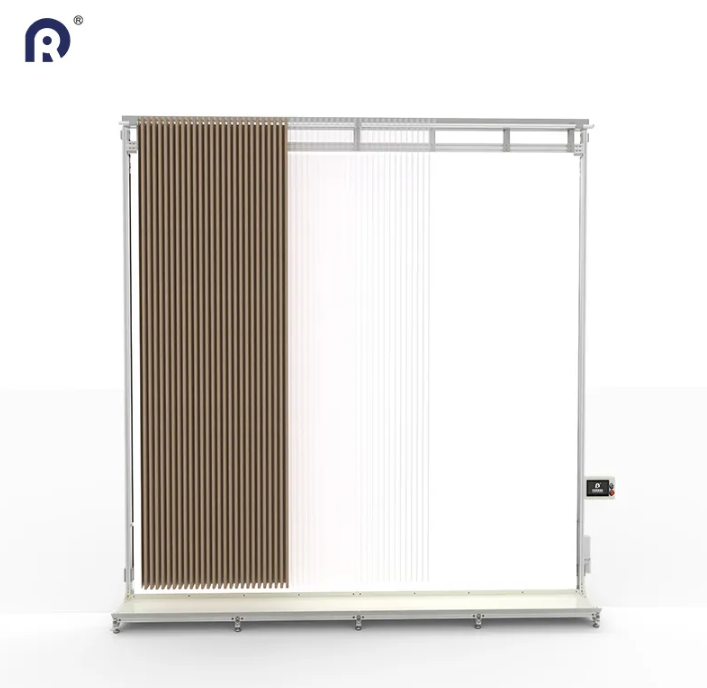
When Manual Production Hits a Ceiling
Most curtain manufacturers running traditional production lines reach a breaking point somewhere around mid-scale growth. The sewing operators are maxed out, cut-length consistency drifts from shift to shift, and fabric waste quietly eats into margins without anyone catching it in real time. The push toward curtain equipment intelligent systems isn't a trend driven by buzzwords. It's a response to a very real production math problem that gets harder to ignore as order volumes climb.
What "Intelligent" Actually Means on a Curtain Line
The term gets used loosely, so it's worth pinning down. In the context of curtain manufacturing machinery, an intelligent system typically integrates three layers:
- Sensing and measurement – optical sensors that detect fabric edge position, thickness variation, and print alignment in real time.
- Feedback-controlled actuation – servo motors that adjust cutting blade position or sewing foot pressure based on sensor input, not preset fixed parameters.
- Data logging and traceability – each production run generates a record of cut dimensions, tension settings, and cycle counts, which feeds into maintenance scheduling and quality review.
The distinction from semi-automatic equipment is meaningful. Semi-automatic machines still depend on an operator to catch and correct deviations. Intelligent systems correct autonomously within defined tolerances, flagging only exceptions that require human judgment.
A Real-World Integration Case from Southeast Asia
A mid-sized roller blind manufacturer in Malaysia running a mixed product line of blackout and sheer fabrics decided to upgrade their hem-folding and cutting stations in 2022. The challenge wasn't just speed. Their blackout fabric had a coating layer that caused inconsistent adhesion in the hemming process, especially during humidity shifts between morning and afternoon shifts. After integrating automated tension-compensation modules and real-time humidity-adjusted heat settings into the laminating station, hem delamination defects dropped substantially, and the line no longer required a dedicated QC station at that point in the flow. That kind of outcome is hard to achieve through operator training alone.
Key Subsystems Worth Prioritizing in an Upgrade
Not every intelligent upgrade delivers equal return. Based on where waste and downtime tend to concentrate in curtain production, these subsystems consistently show measurable impact:
| Subsystem | Main Problem Solved | Typical Benefit |
|---|---|---|
| Automated fabric spreading | Edge curl and misalignment | Reduces cut waste per roll |
| Servo-driven cutting control | Length deviation across batches | Tighter cut tolerance (±1mm range) |
| Intelligent hem folder | Fold width inconsistency | Consistent hem across fabric weights |
| PLC-integrated sewing head | Thread tension variation | Fewer seam breaks on heavy fabric |
| MES data collection | No visibility into cycle times | Enables bottleneck identification |
Prioritization depends on where the current line loses the most material or labor time. Running a short time study before committing to hardware is usually worth the effort.
Integration Challenges That Often Get Underestimated
Connectivity between new intelligent modules and existing equipment is where projects stall most often. Legacy machines often use proprietary communication protocols that don't natively talk to modern PLC platforms. A factory in eastern China upgrading their cutting line discovered this after delivery: the new automated spreader used EtherCAT communication while their existing sewing line ran on an older Modbus RTU setup. Bridging the two required a protocol gateway device and an additional two weeks of integration work that hadn't been scoped. Planning for protocol compatibility upfront prevents that kind of delay.
Power infrastructure is another underestimated factor. Servo systems have different peak draw profiles than the induction motors they replace, and older factory wiring sometimes can't handle the transient loads cleanly.
Building a Realistic Implementation Roadmap
A phased approach almost always works better than a full-line replacement. Starting with the highest-impact bottleneck, validating the improvement, and then moving to the next stage gives operations teams time to adapt and helps justify continued capital investment with internal data rather than vendor projections.
The International Federation of Robotics (IFR) notes in its 2023 World Robotics report that small and medium-sized manufacturers in the textile and soft goods sector are adopting automation at an accelerating pace, with integration payback periods typically ranging from 18 to 36 months depending on labor cost context and production volume.
Ridong brings over two decades of focused development in curtain and sunshade machinery, with an equipment lineup that spans full-line integration from fabric storage through finished hem, designed to support exactly the kind of phased intelligent upgrade approach that production teams can manage without halting existing output.