
 EN
EN
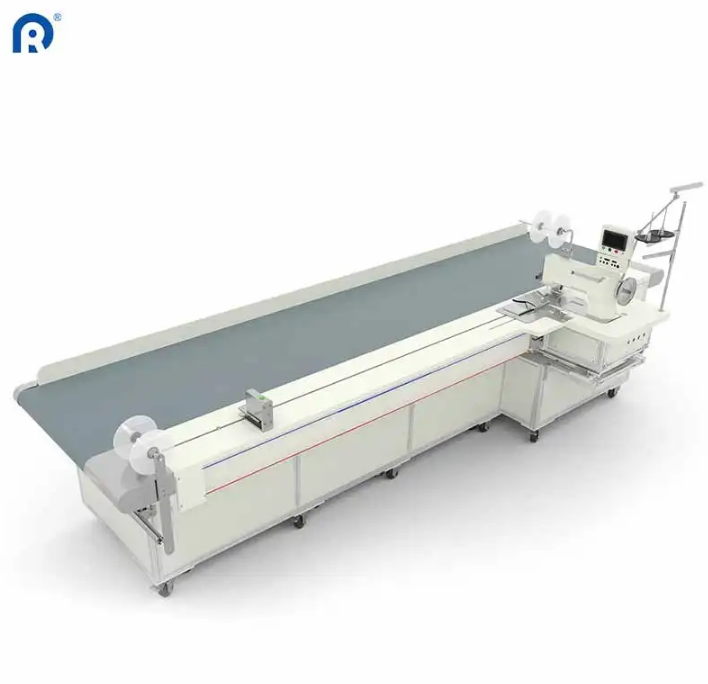
The Real Cost of Skipping Hem Machine Maintenance
A curtain hem sewing machine running eight or ten hours a day is under more accumulated stress than most operators account for. The needle bar reciprocates thousands of times per hour, the feed dog mechanism cycles against varying fabric weights, and the hook timing drifts incrementally unless someone is actively checking it. The machines that get pulled from the floor for unexpected repairs at the worst possible moment are almost always the ones where basic upkeep got treated as optional. Extending machine life isn't about doing more, it's about doing specific things consistently.
Understanding Where Hem Machines Actually Wear
Before getting into practices, it helps to understand the actual wear mechanics. In a lockstitch hem sewing machine, the three zones that accumulate wear fastest are:
1.The rotary hook assembly – the hook point and the bobbin case race develop micro-scoring over time from thread friction, which eventually causes skipped stitches and then breakage.
2.The feed dog teeth – these wear down from abrasive synthetic fabrics and lose their grip, leading to uneven stitch spacing and hem puckering.
3.The needle bar bushing – lateral play develops as the bushing wears, which throws off needle-to-hook timing and causes erratic loops.
The International Organization for Standardization's ISO 10216 standard on sewing machine performance testing identifies hook timing accuracy as a primary performance variable, and field data from sewing machine repair technicians consistently points to hook wear as the leading cause of mid-run failures on heavy-fabric operations.
Lubrication Schedules That Actually Work in Practice
Most machine manuals specify lubrication intervals by time (every 8 hours, every 40 hours). In practice, those intervals are calibrated for average conditions, and curtain production often runs hotter than average due to synthetic-heavy fabric mixes and continuous-duty cycles. A more reliable trigger for high-production environments is to schedule lubrication by a combination of runtime hours and fabric type, applying lubricant at shorter intervals when processing coated or heavily bonded materials.
| Fabric Type | Recommended Lubrication Trigger | Key Points |
|---|---|---|
| Sheer / lightweight | Every 40 operating hours | Standard oil, avoid over-lubrication near fabric path |
| Blackout / coated | Every 20 operating hours | Check hook race for coating residue each cycle |
| Heavy drape / lining | Every 25 operating hours | Inspect feed dog teeth condition alongside lubrication |
| Fusible / bonded hem | Every 15 operating hours | Clean adhesive residue from hook area before oiling |
Using the wrong oil grade is as damaging as under-lubrication. High-viscosity oils in fast-running mechanisms cause heat buildup. Sewing machine oil certified to ISO VG 7 or VG 10 is the appropriate range for most industrial curtain hem machines.
Needle Selection as a Maintenance Variable
Needle condition gets overlooked as a maintenance issue because needles are inexpensive and operators tend to swap them only after a visible break. The problem is that a needle develops a burr or a slight bend well before it visibly fails, and that degraded needle creates micro-tears in synthetic coatings and increases hook wear through misaligned loop formation. A production facility in northern Jiangsu running blackout curtain hem operations found that switching from a reactive needle change policy (replace after breakage) to a proactive interval-based policy (replace every 6 to 8 hours of continuous runtime on coated fabric) reduced hook replacement frequency noticeably over a six-month period.
Needle system compatibility also matters. Running a needle system that doesn't match the machine's hook geometry wastes the mechanical advantage of the hook and creates premature wear on both components.
Thread Path Tension as a Diagnostic Tool
Before a hem machine shows visible symptoms of wear, it usually signals problems through thread behavior. Inconsistent upper tension, looping on the underside of the hem, or thread breakage at high speed can all indicate bearing wear or hook timing drift rather than thread quality issues. Running a simple tension check with a spring-balance gauge against the machine's spec sheet takes about three minutes and can identify emerging issues months before they cause downtime.
The feed mechanism is worth checking at the same time. Place a single layer of the production fabric under the presser foot without threading, run the machine through a meter, and check for uniform feed marks. Uneven spacing or skipped marks signal feed dog wear or timing irregularities.
Building a Practical Maintenance Log for the Floor
The machines that consistently run longer between major rebuilds are the ones with visible, simple maintenance records attached to them. A one-page log that tracks lubrication date, needle change, tension check result, and any audible or vibration anomalies gives any technician who touches the machine a clear picture of its service history. It also creates accountability without adding bureaucracy.
Digital maintenance tracking systems exist for this, but a laminated card on the machine works just as well for most small to mid-scale curtain production setups. The format matters less than the consistency.
Ridong designs its curtain hem sewing machines with accessible service points, standardized oil ports, and hook assemblies engineered for extended service intervals, making the kind of systematic maintenance described here practical to execute at production floor speed rather than pulling equipment offline for extended service windows.