
 EN
EN
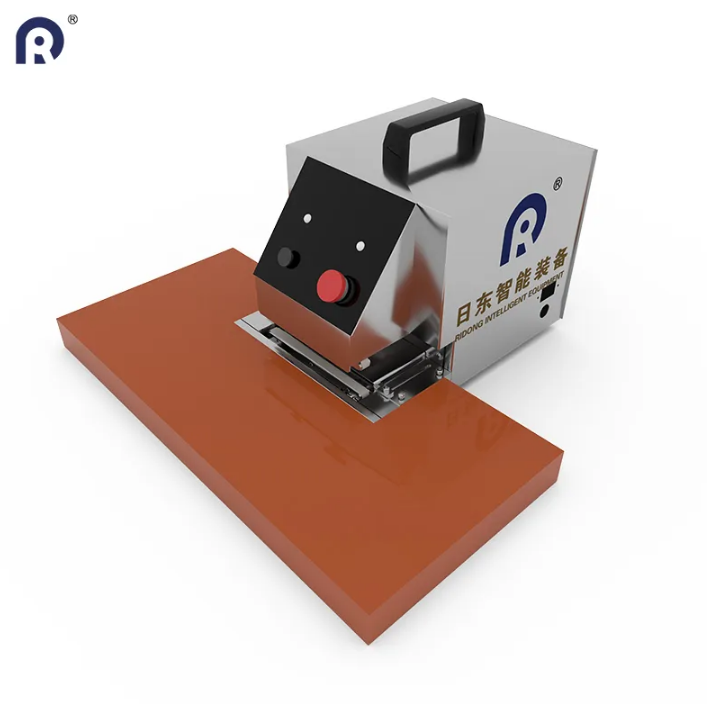
The $3,000 Price Difference That Cost $12,000 in Claims
A customer in Australia called last month, furious. Not at the company he'd bought from—at the machine. He'd saved $3,000 on a sunshade fabric welding machine six months earlier. The welds on his zip screens kept splitting after about 800 cycles of rolling up and down. Eight hundred cycles sounds like a lot until you realize a zip screen on a Perth patio goes up and down at least twice a day. That's six months of use before the product fails. The warranty claims from his end customers had already cost him $12,000.
That story captures the single most important truth about sunshade fabric welding: the purchase price tells you almost nothing. What matters is what happens to that weld after a thousand cycles in Australian sun, German winter, or Colombian humidity. If the weld fails, the reputation fails with it.
Understanding What Sunshade Fabric Welding Actually Does
Sunshade fabric welding—sometimes called zip screen welding or hot-bar thermal welding—is the process of joining fabric panels using heat and pressure. A heated bar presses the fabric layers together under controlled pressure, fusing them into a permanent bond. No glue. No stitching. Just heat, pressure, and precise timing.
This is not ultrasonic welding. Ultrasonic uses high-frequency vibration to generate heat through friction. Thermal welding uses direct heat from a heated element. For the coated fabrics used in outdoor sunshade applications—PVC-coated polyester, acrylic-coated fiberglass, and similar materials—thermal welding produces a stronger, more UV-resistant bond than any alternative method.
The machines typically handle welding lengths from 3 meters up to 15 meters, and the length is customizable. A 3-meter bed covers standard balcony screens. A 6-meter or longer bed handles commercial jobs for restaurant terraces and building facades. The welding bed is built to order, not off-the-shelf.
The Five Welding Jobs One Machine Needs to Handle
On a single sunshade fabric panel, you might run five different welding processes. A machine that does all five well is a production line. A machine that only does one or two is a bottleneck waiting to happen.
Zipper welding is the core process. The machine fuses the zipper teeth profile into the fabric edge. This is the seam that lets the screen zip together when it rolls up. If this weld isn't perfect, the screen jams on day one. The zipper weld is narrow, precise, and has to be dead straight—any wobble and the zipper won't track properly in the guide rails.
Join welding comes into play when the fabric roll isn't wide enough for the panel you need. The join weld has to be flat, strong, and nearly invisible. A bulky join weld catches on the guide rails during rolling. Join welding is usually the highest-volume process on the machine.
Pocket welding creates the pocket at the bottom of the screen for the weight bar that keeps tension on the fabric and prevents flapping in wind. The machine folds the fabric edge and welds the pocket hem in one pass. This is usually the widest weld on the panel. Getting the pocket dimensions exactly right is critical—too tight and the weight bar won't slide in, too loose and it rattles.
T-bar welding handles the T-shaped plastic stiffener strip along the edges. This weld has to be clean and consistent across the full length of the panel.
Rubber strip welding seals the bottom edge of the screen, providing protection against wear and weather exposure. This is often the final weld on the panel before it goes to packaging.
| Welding Process | Purpose | Key Quality Factor | Typical Length |
|---|---|---|---|
| Zipper welding | Fuse zipper profile to fabric edge | Straightness, precision | Full panel height |
| Join welding | Join two fabric pieces side by side | Flatness, invisibility | Full panel height |
| Pocket welding | Create weight bar pocket | Dimension accuracy | Bottom edge width |
| T-bar welding | Attach stiffener strip | Consistency, cleanliness | Full panel height |
| Rubber strip welding | Seal bottom edge | Durability, weather resistance | Bottom edge width |
Temperature Control: The Difference Between a Good Weld and a Disaster
The most common failure point on sunshade fabric welding machines isn't the heating element or the pressure system. It's the temperature control. Specifically, the ability to maintain consistent temperature across the full length of the welding bed.
A welding bed that's 3 meters long has hot spots and cold spots unless the heating elements are properly distributed and the thermal sensors are accurately placed. A variation of even 5°C across the bed produces inconsistent welds—some sections over-heated and brittle, others under-heated and weak.
The industry benchmark for quality thermal welding is temperature uniformity within ±3°C across the entire welding surface. Machines that achieve this consistently produce welds that withstand the 1,000-cycle test used by most commercial specifiers. Machines that don't? They produce field failures that come back as warranty claims.
A practical check: before committing to a machine, ask to see thermal imaging data of the welding bed at operating temperature. If the supplier can't provide it, that's a red flag. If they can and the data shows more than ±3°C variation, keep looking.
Real Production Data from a Factory That Got It Right
A factory in Spain that produces exterior zip screens for the Mediterranean hospitality market implemented a new sunshade fabric welding machine after a detailed evaluation process. They ran a three-month trial comparing their existing machine against the new one on the same fabric—a 320gsm PVC-coated polyester—with the same operators and the same quality inspection protocol.
The results were instructive. The new machine produced welds that passed the pull-strength test at 98% on first pass, compared to 82% on the old machine. That 16% improvement translated to 60 fewer reworks per week on their typical production volume. But the more telling number was the consistency across the welding bed. The old machine had a 7°C temperature variation from end to end. The new one held ±2°C. The old machine produced visible variation in weld quality between the first and last meter of every panel. The new machine produced identical welds from start to finish.
That factory now runs three welding machines on two shifts. The rework rate is down 73% from where it started. The maintenance manager reports that the new machines require about half the calibration time of the old ones. And the production manager? He's stopped getting calls from angry customers.
Operator Training and the Learning Curve Nobody Factors In
A sunshade fabric welding machine is only as good as the person running it. The best temperature control system in the world won't compensate for an operator who doesn't understand how fabric moisture content affects the weld, or who doesn't recognize the visual signs of an under-heated joint.
The learning curve is real. Most operators need two to three weeks of supervised production before they can run the machine independently at full speed. Another month before they can diagnose and correct common issues without calling maintenance. Factories that budget for this training time see much faster ROI than those that assume the machine is plug-and-play.
The training should cover: fabric types and their optimal welding parameters, visual inspection of weld quality, routine cleaning and maintenance of the heating elements, and troubleshooting common problems like inconsistent pressure or temperature drift. A machine that's easy to train on—with intuitive controls and clear visual feedback—reduces this learning curve significantly.
Maintenance That Prevents Problems Instead of Reacting to Them
The most efficient sunshade fabric welding operations share one thing in common: they do maintenance on a schedule, not in response to failures. The heating elements degrade over time. The pressure system needs calibration. The fabric feed mechanisms wear. None of these failures are sudden. They're gradual. And gradual failures can be caught and corrected before they affect production quality.
A basic preventive maintenance schedule for a welding machine includes: daily cleaning of the welding bed (residue buildup affects heat transfer), weekly calibration of the temperature sensors, monthly inspection of the heating elements for signs of degradation, and quarterly replacement of wear items like feed rollers and guide rails.
Factories that follow this schedule report 60-70% fewer unplanned downtime incidents than those that wait for problems to appear. The cost of the maintenance program is a fraction of the cost of one production stoppage.
When to Invest in a Welding Machine vs. Outsourcing the Work
The decision to bring sunshade fabric welding in-house versus outsourcing it comes down to volume and control. Factories producing fewer than 500 panels per month often find that outsourcing makes financial sense—the capital cost of the machine and the training time don't pencil out at that volume.
Above 1,000 panels per month, the math flips. The cost per weld drops significantly when the machine runs consistently, and the quality control benefits of in-house production start to matter. The ability to catch quality issues before they ship, rather than discovering them in customer complaints, has value that goes beyond the per-unit cost calculation.
There's also the lead time factor. Outsourced welding adds days or weeks to production schedules. In-house welding lets factories control their own timelines. For manufacturers supplying to hospitality projects with tight installation deadlines, that control is often worth more than the cost difference.
Suppliers with extensive experience in sunshade equipment—those that have provided solutions to over 80 countries and worked with more than 10,000 clients—can provide production modeling that helps factories make this decision based on their actual order book, not generic industry averages. The right equipment partner doesn't just sell a machine. They help build a production plan that makes the investment work.
Table of Contents
- The $3,000 Price Difference That Cost $12,000 in Claims
- Understanding What Sunshade Fabric Welding Actually Does
- The Five Welding Jobs One Machine Needs to Handle
- Temperature Control: The Difference Between a Good Weld and a Disaster
- Real Production Data from a Factory That Got It Right
- Operator Training and the Learning Curve Nobody Factors In
- Maintenance That Prevents Problems Instead of Reacting to Them
- When to Invest in a Welding Machine vs. Outsourcing the Work


