
 EN
EN
The Phone Call That Changed One Factory's Approach to Cutting
A guy running a mid-sized roller blind factory in Poland called two years ago, genuinely angry. He'd just scrapped 400 meters of blackout fabric because his blade cutter went dull halfway through a major contract. The edges looked like they'd been chewed by something with teeth. Four hundred meters. Straight into the bin.
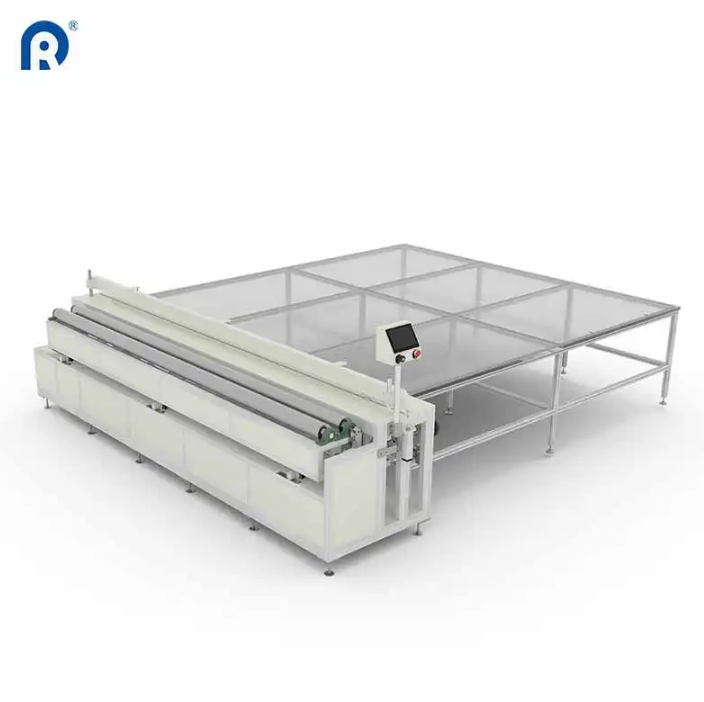
That call wasn't unusual. What was unusual was what happened next. He replaced that blade cutter with an ultrasonic fabric cutting machine. Six months later, he called again—this time not angry. His edge defect rate had dropped from 4.2% to 0.3%. His operators were finishing 40% more panels per shift. And he'd stopped throwing fabric in the bin.
The technology isn't new. Ultrasonic cutting has been around for years. What's changed is the price-performance equation. The machines have gotten reliable enough and affordable enough that the question has shifted from "should we?" to "why haven't we yet?"
What Actually Happens Inside an Ultrasonic Cutter
Skip the marketing fluff. Here's what's happening inside an ultrasonic fabric cutting machine: a titanium horn vibrates at 20,000 to 35,000 times per second. The amplitude is microscopic—you can't see it move. But when fabric hits that vibrating horn, the friction generates enough heat to melt the material right at the cut line. The edge seals itself shut in the same instant it's cut. No blade. No thread. No glue. No fraying. One pass, done.
That self-sealing edge is the reason ultrasonic went from "interesting experiment" to "industry standard" in about five years. Traditional blade cutting leaves a raw edge. Raw edges fray. Frayed edges need a second operation to hem or seal them. That second operation costs time and money. Ultrasonic eliminates it entirely.
The horn does wear out eventually—titanium erodes over thousands of hours of use. But the decline is predictable. No surprise quality drops on a Thursday afternoon when you're trying to ship. Compare that to a blade cutter: fresh blade on day one gives beautiful cuts. Day three, still decent. Day seven, after 5,000 linear meters of polyester? The blade is micro-chipped in places you can't see, and suddenly one in twenty panels has a jagged edge.
The Numbers That Make Factory Owners Do a Double-Take
Here's where the math gets interesting. A traditional blade cutting setup requires edge finishing on every panel—either a folded hem stitched on a sewing machine, or a heat-seal pass on a separate machine. Budget about 15 to 30 seconds per panel for that step. Multiply by a few thousand panels a month and you're looking at real labor hours.
An ultrasonic fabric cutting table does both steps in one. The cut is the finish.
| Metric | Blade Cutter | Ultrasonic Cutter | Improvement |
|---|---|---|---|
| Edge defect rate | 3–5% | 0.2–0.5% | 90%+ reduction |
| Panels per 8-hour shift | 180–220 | 250–310 | 35–40% more |
| Edge finishing steps | 2 (cut + seal/hem) | 1 (cut = finish) | 50% fewer steps |
| Quality consistency | Declines with blade wear | Stable until horn replacement | Predictable |
| Operator skill required | Moderate | Lower | Easier training |
The numbers from actual production floors bear this out. A factory in Mexico that ran a side-by-side comparison on the same fabric, same operator experience level, same shift length found the ultrasonic table finished 40% more panels in an eight-hour shift. Not because it cut faster—the actual cutting speed was similar—but because nobody had to touch those panels again before packaging.
Material Matters: Where Ultrasonic Excels and Where It Doesn't
Ultrasonic cutting works beautifully on synthetic fabrics—polyester, nylon, acrylic, and blends with high synthetic content. The heat generated by the vibration melts the material, and the edge seals as it cuts. For sheer curtains, voile, and technical fabrics that unravel the moment you look at them wrong, ultrasonic is a lifesaver.
But it's not a universal solution. Natural fibers like cotton, linen, and wool don't respond the same way. They don't melt—they burn. The edge doesn't seal; it chars. For these materials, ultrasonic cutting produces a brown, brittle edge that's worse than a raw blade cut.
The sweet spot is fabrics with at least 60% synthetic content. Below that threshold, the self-sealing effect diminishes, and the cut quality degrades. Some manufacturers offer adjustable frequency control to handle different fabric weights and compositions. A fixed-frequency machine works beautifully on one fabric and destroys another. Variable frequency gives the flexibility to dial in the right setting for each material.
The Hidden Labor Savings Nobody Talks About
The obvious benefit of ultrasonic cutting is eliminating the edge-finishing step. That's the headline number. But there's a second-order effect that's equally important: reduced operator fatigue and error.
Blade cutting requires physical force. Operators push, pull, and guide the fabric through the cutter. Over an eight-hour shift, that adds up. Fatigue sets in. By hour six, the cuts get less precise. The fabric drifts. Edges come out uneven. QC catches some of it, but not all.
Ultrasonic cutting requires almost no physical effort. The operator guides the fabric, but the machine does the work. The result is more consistent quality across the entire shift—not just the first few hours. One factory tracked their defect rate by hour of the day. With blade cutting, defects spiked after lunch and again in the last hour of the shift. With ultrasonic, the defect rate stayed flat from start to finish.
That consistency translates to less rework, fewer customer complaints, and lower training costs for new operators. The machine doesn't care if the operator is fresh or tired. It delivers the same cut every time.
Industry Standards and What They Actually Require
The ISO 4916 standard for seam types doesn't specifically address ultrasonic cutting, but the relevant quality benchmarks for edge finishing do. For most commercial curtain and blind applications, the acceptable edge finish is one that prevents unraveling and maintains dimensional stability through washing and use. Ultrasonic cutting meets and often exceeds these requirements.
Third-party testing has shown ultrasonic-sealed edges withstand more than 50 wash cycles without fraying or delamination—comparable to heat-sealed hems and superior to raw cuts. For outdoor applications where UV exposure is a factor, the sealed edge also provides better resistance to edge degradation than stitched hems, which can wick moisture into the fabric layers.
The practical implication: for manufacturers supplying to hospitality, healthcare, or commercial sectors where durability standards are strict, ultrasonic cutting provides documented performance that meets or exceeds spec without the added cost of a secondary finishing operation.
The Real-World Limitations Worth Knowing
Ultrasonic cutting machines aren't perfect. The horns have a finite lifespan—typically 3,000 to 8,000 hours of operation depending on the fabric type and cutting frequency. Replacement horns are expensive, and the machine is down while the swap happens. Smart factories keep a spare horn on hand and schedule replacements during planned maintenance windows rather than waiting for failure.
The machines also require clean, dry fabric. Moisture interferes with the ultrasonic vibration and produces inconsistent seals. Fabrics stored in humid environments or shipped without proper moisture barriers can cause problems that have nothing to do with the machine itself.
And then there's the thickness limitation. Ultrasonic cutting works best on materials up to about 3mm thick. Above that, the vibration can't generate enough heat to seal the entire edge uniformly. For thicker materials—heavy upholstery fabrics or multi-layer composites—alternative methods like hot-knife cutting or laser cutting might be more appropriate.
None of these limitations are deal-breakers. They're just realities that any factory considering an ultrasonic fabric cutting machine needs to factor into their decision.
Making the Switch Without Disrupting Production
The transition from blade cutting to ultrasonic doesn't have to be all-or-nothing. Factories that have done it successfully typically start with one machine on their most problematic fabric—the one that frays the worst or requires the most rework—and run it alongside existing blade cutters for a few months. This gives operators time to learn the new process without the pressure of meeting full production targets from day one.
The production data from that pilot machine builds the business case for the next one. By the time the second machine arrives, the operators are already trained, the workflow is documented, and the ROI is proven with actual factory numbers—not manufacturer estimates.
Manufacturers with experience in this transition—those that have been refining ultrasonic technology for over 18 years—can provide guidance on implementation phasing, operator training, and maintenance scheduling that minimizes disruption. The goal isn't just to buy a machine. It's to integrate a technology that makes the whole factory more efficient.
Table of Contents
- The Phone Call That Changed One Factory's Approach to Cutting
- What Actually Happens Inside an Ultrasonic Cutter
- The Numbers That Make Factory Owners Do a Double-Take
- Material Matters: Where Ultrasonic Excels and Where It Doesn't
- The Hidden Labor Savings Nobody Talks About
- Industry Standards and What They Actually Require
- The Real-World Limitations Worth Knowing
- Making the Switch Without Disrupting Production


