
 EN
EN
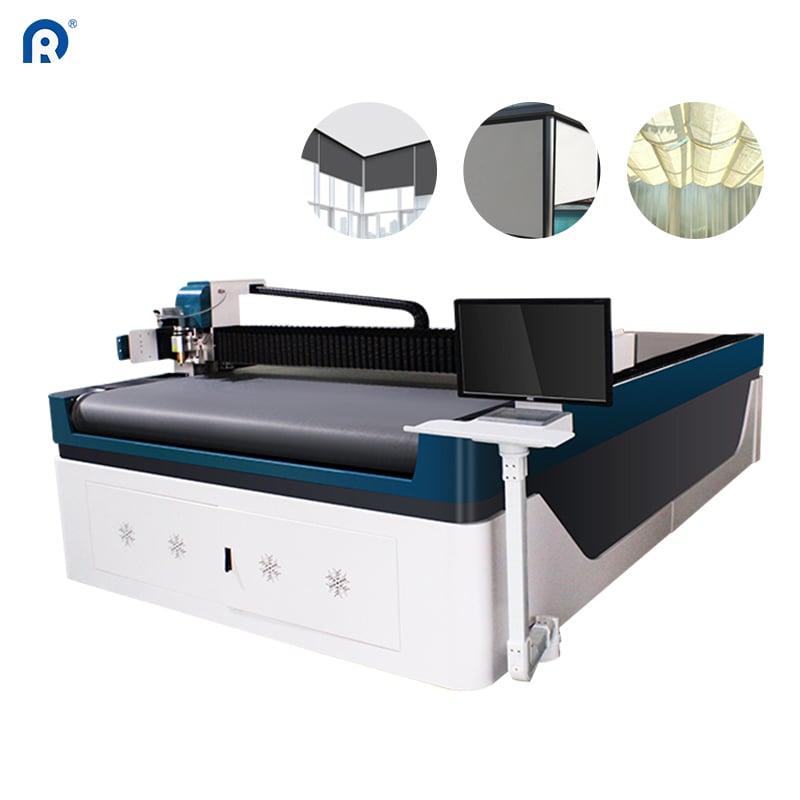
The Cutting Table That Gets Misused
Every roller blind factory has at least one cutting table. Some have several. Walk through the production floor and you will see them holding fabric rolls, serving as makeshift workspaces, or collecting dust in corners. The irony is that these machines represent a significant capital investment, yet many operations use them at a fraction of their potential.
A cutting table is not just a flat surface with a blade. Modern ultrasonic cutting tables combine CNC control, precision positioning systems, and multiple tool heads to handle everything from straight cuts to complex shapes. The technology has advanced considerably over the past decade, but shop floor practices have not always kept pace.
A fabricator in the Midwest United States discovered this when they audited their cutting department utilization. Their ultrasonic cutting table, capable of processing panels up to 3.2 by 6 meters, was running at less than 40% of its capacity during standard shifts. The machine was not broken. The operators simply had not been trained on half of its features.
Understanding What the Machine Can Actually Do
The gap between what a cutting table offers and what operators use is often wider than expected. Take ultrasonic cutting, for example. The technology uses high-frequency vibrations to create clean, sealed edges in a single pass. That means no fraying, no secondary edge-sealing operation, and no loose fibers to clean up afterward. For roller blind fabrics, this is particularly valuable because the cut edge becomes the finished edge.
Beyond ultrasonic blades, modern tables support multiple tool types—pizza knives for straight cuts, crush knives for heavy materials, and rotary blades for intricate patterns. Each tool serves a specific purpose, and switching between them takes minutes, not hours. Yet many shops default to a single tool for every job, losing efficiency and quality in the process.
The software side matters just as much. Nesting optimization algorithms can reduce material waste by arranging cut patterns to maximize fabric usage. A table with good software support can store fabric data, track remnant pieces, and suggest optimal cutting sequences. These features are not optional extras—they are core to the value proposition of a modern cutting table.
The Real Cost of Underutilization
Underutilization shows up in places that are easy to miss. Material waste is the obvious one. When a cutting table's nesting software goes unused, operators rely on manual layout—which typically leaves more scrap. A shop processing 500 roller blinds per week might waste an extra 5 to 8% of fabric simply because they are not using the optimization tools already built into their machine.
Labor is the less obvious cost. A cutting table that runs at partial capacity still requires a dedicated operator. If that operator spends half their time waiting for the machine or manually positioning materials, the labor cost per cut goes up. The machine might be producing acceptable output, but the cost structure is inefficient.
| Utilization Factor | Typical Shop A (Basic Use) | Typical Shop B (Optimized Use) |
|---|---|---|
| Material waste rate | 10–12% | 5–7% |
| Cuts per operator shift | 80–100 | 140–180 |
| Tool changeover time | 20–30 minutes | 5–10 minutes |
| Software features used | 20–30% | 70–80% |
The contrast between basic and optimized usage is not theoretical. These numbers come from comparing shops with similar equipment but different operational approaches. The gap in material waste alone can translate to thousands of dollars per year in saved fabric costs.
A Case from a Turkish Roller Blind Exporter
A manufacturer in Istanbul had been using their ultrasonic cutting table for three years with reasonable success. The machine cut accurately, the edges sealed well, and production kept up with orders. But when they expanded into custom-sized roller blinds for the European market, they hit a wall. Each order required different dimensions, and their manual programming approach could not keep up with the variety.
They brought in a consultant who spent a week on the shop floor. The recommendation was simple: start using the barcode scanning and order entry features already available on the machine. Instead of manually entering dimensions for each order, operators could scan a barcode and let the system pull the cutting parameters from the database.
The change took two days to implement. Within a week, their cutting throughput increased by roughly 40% without adding any new equipment. The machine had been capable of this all along. They just had not been using the features.
Industry Standards and Performance Benchmarks
The window covering equipment sector has seen steady technological improvement, but adoption of advanced features varies widely. Industry observers note that the global cloth cutting machine market is projected to grow at a compound annual rate of around 5.5% through 2031. That growth is driven partly by replacement demand and partly by manufacturers upgrading to more capable systems.
What constitutes “state of the art” has shifted. A cutting table with CNC control, multiple tool heads, and integrated software is now considered standard for medium to large production operations. The tables that were cutting-edge five years ago are now baseline equipment. The question is whether shops are extracting the full value from what they already own.
Safety features have also improved. Modern tables include optical barriers that stop the clamping bar if hands or objects are detected underneath. These systems reduce injury risk and allow operators to work faster without compromising safety. Yet some shops disable or bypass these features to save seconds per cycle, missing the point that safety and productivity are not tradeoffs—they reinforce each other.
Where Optimization Hits Its Limits
Pushing a cutting table to maximum utilization is not always the right goal. Some jobs are simply not suited to automated cutting. Small batch sizes, unusual fabric types, or highly customized orders may be better handled manually. The setup time for programming a complex cut pattern might exceed the time saved by automation.
Material characteristics also impose limits. Ultrasonic cutting works well on synthetic fabrics like PVC and polyester, but natural fibers or heavily coated materials may not seal properly. The machine's cutting thickness range typically falls between 0.1 and 2 millimeters, which covers most roller blind fabrics but excludes heavier industrial textiles.
The table's physical dimensions also matter. A machine with a 3.2 by 6 meter cutting area cannot handle panels beyond that size without repositioning, which introduces alignment challenges. For manufacturers producing extra-wide awnings or large-format shades, the cutting table's capacity may become a bottleneck regardless of how well it is optimized.
Practical Steps for Better Utilization
The path to better cutting table utilization starts with an audit. Track what the machine actually does over a week. Note which tools get used, which software features get touched, and where operators spend their time. The gaps will become obvious.
Training is the next step. Many cutting tables come with comprehensive software capabilities that never get explored because no one took the time to learn them. A day of focused training on nesting optimization or barcode integration can yield returns that far exceed the training cost.
Finally, treat the cutting table as part of a system, not an isolated machine. Connect it to the order management system. Use the data it generates to inform purchasing and inventory decisions. The table can do more than cut fabric—it can provide intelligence about material usage, production bottlenecks, and quality trends.
Ridong manufactures a range of ultrasonic cutting tables designed for the roller blind and sun shading industry, with configurations that support various production scales and material types. Their equipment emphasizes precision, reliability, and integration with existing production workflows, reflecting a manufacturing philosophy built around practical shop-floor needs.


