
 EN
EN
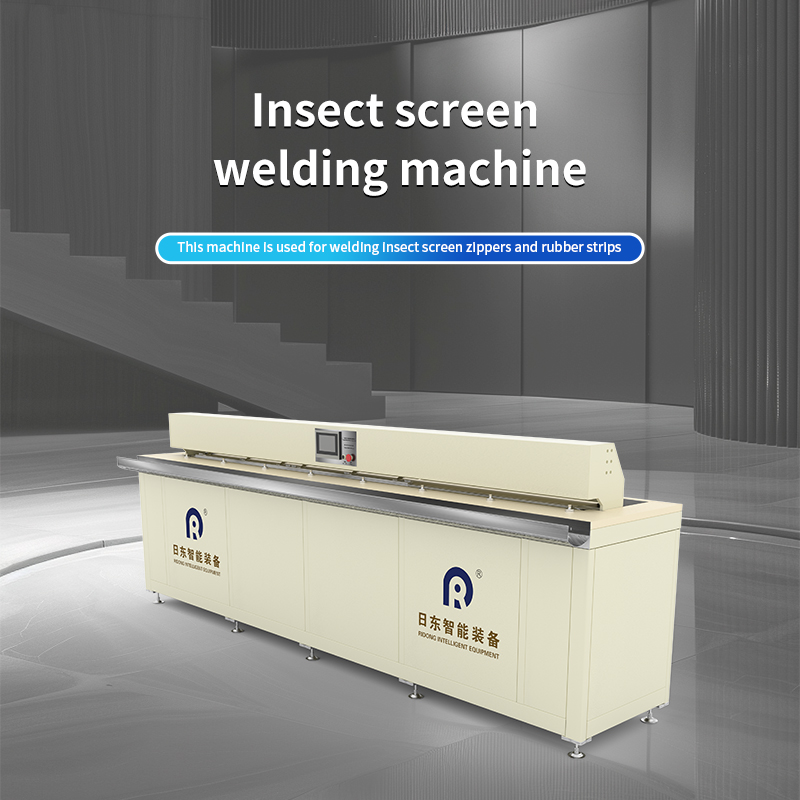
Why Insect Screen Welding Machines Eliminate Manual Bottlenecks
Global demand surge for insect screens and the scalability limits of hand welding
The combination of growing cities and climate change related pest problems has pushed the need for insect screens worldwide up by around 27% every year according to the Vector Control Index from 2023. This surge creates serious challenges for factories still using old school manual assembly techniques. When workers hand weld these screens, they can only manage about 15 to 20 panels an hour because seams don't always line up right, people get tired after repetitive work, and different materials like fiberglass, polyester, and stainless steel mesh all need specific tension settings that just aren't possible with basic manual approaches. With monthly orders now regularly hitting over 10,000 units, many workshop owners find themselves stuck between two bad options increasing their workforce costs significantly or letting shipments fall behind schedule, which ultimately damages relationships with customers who expect timely deliveries.
Quantified gains: 68% higher throughput and 92% lower weld variability vs. manual processes
Insect screen welding machines for industrial use tackle these limitations with smart automation that gives real performance boosts. Factory stats indicate around 55 panels get made each hour, which is roughly two thirds faster than when workers do it manually. Plus, variations in weld dimensions drop about 90 something percent according to that 2024 Manufacturing Efficiency Report. The reason? These machines come with adjustable pressure settings that work well for materials ranging from 0.2mm right up to 1.2mm thick. They also track seams automatically, so there's no chance of mistakes creeping in from tired eyes. Thermal systems keep things running smoothly too, making sure every type of joint gets fused properly whether it's a T shape or just going around the edges. All this means manufacturers save about 40 cents on each panel when producing large batches, giving them better control over prices as they grow into new markets.
How Precision Resistance Welding Ensures Seamless, High-Integrity Insect Screens
Seam-free mesh joints without compromising tensile strength or airflow
When using precision resistance welding on mesh materials, the fibers actually fuse together without creating holes, frayed edges, or noticeable seams. This keeps everything structurally sound while maintaining how well the material works as intended. Traditional methods like hand sewing or gluing just don't compare since they rely on applying heat and pressure right where needed to form those deep connections at the molecular level. According to recent research from Textile Durability Studies published last year, these welds hold about 98% of what the original mesh could handle before breaking under stress. That means it can take a lot of punishment without giving way. Tests looking at air movement show welded mesh lets through only about 3% less air compared to regular mesh that hasn't been treated this way. So we get good breathability plus complete protection from bugs getting through. Mechanical fasteners simply won't do this job properly because they wear out eventually and block airflow too much for most applications.
Technical capabilities: custom profiles up to 6 meters, material-agnostic weld control
Modern welding machines meet diverse production needs through intelligent, adaptive parameter control:
- Profile flexibility: Supports frames from residential window units to industrial barriers up to 6 meters long
- Material versatility: Delivers consistent weld quality across polyester, fiberglass, and stainless-steel meshes via real-time current modulation
- Process control: Monitors temperature within ±10°C and pressure within ±0.2 PSI to prevent burn-throughâeven on ultra-thin fabrics
Automated calibration adjusts for thicknesses ranging from 0.4â1.2 mm, achieving 99.2% weld consistency in live production environments (Industrial Textile Quarterly, 2023). This eliminates manual rework and enables rapid, reliable changeovers between screen types.
Scaling Production Capacity with Industrial-Grade Insect Screen Welding Machines
Insect screen welding machines built for industrial use completely change how workshops operate, turning them into real manufacturing powerhouses. These machines run non-stop day and night, taking away all those limitations of manual work and cranking out way more product than before. We're talking around 50 panels an hour now, which is like tripling what someone could do by hand. And despite all this increased production, the welds still hold up after thousands of cycles. The Pest Control Technology Report says global demand for insect screens is growing at about 23% each year, so manufacturers need these machines to keep up without hiring tons of extra workers. What makes these systems really valuable is how they slot right into existing setups with roller blind cutting tables and conveyor belts, creating smooth production flows that cut down on wasted time between jobs. When companies switch from their old semi-automatic methods to full industrial welding, it's not just about faster production. It's actually a big mindset change too many shops make when they start thinking ahead about capacity instead of scrambling to fill orders as they come in. This lets them take on bigger contracts and handle those busy seasons without sacrificing quality.
Selecting the Right Insect Screen Welding Machine for Your Operation
Matching machine configuration to output needs: SME workshops vs. OEM volume lines
The size of production operations really determines what kind of machinery works best. For small to mid-sized businesses, compact semi-auto systems that handle around 50 panels per hour make sense because they need flexibility without breaking the bank on equipment costs. These setups work well when companies deal with lots of different short run jobs. On the flip side, big original equipment manufacturers go for continuous feed lines that can push over 200 panels an hour. Their machines come with automatic material handling systems and built-in optical inspection to keep quality consistent across massive volumes. When volume producers start using servo driven conveyors along with PLC automation technology, they often see their output jump by as much as eight times compared to traditional manual methods. This shows scalability isn't simply about going faster it's actually about having smarter systems that adapt to changing demands.
Key evaluation criteria: repeatability, changeover time, and integration readiness
Weld consistency matters just as much as how fast things get done. When looking at weld quality, most good operations hit repeatability rates above 99.5%, which helps cut down on wasted mesh material. The modular tooling makes switching between different screen setups much quicker too. Some of the better systems can switch configurations in less than 15 minutes while older equipment might take upwards of two whole hours. Checking if everything works together is important too. Systems with open APIs and standard PLC connections talk nicely to existing cutting tables, ERP software, and MES systems without headaches. Factories that have their welding processes properly integrated tend to see around 40% fewer mistakes during handling and ship products out much faster from when orders come in.
FAQ
Why is there a growing demand for insect screens?
The rise in global demand for insect screens is largely due to urbanization and climate change, which have both resulted in increased pest problems.
How do insect screen welding machines improve production?
These machines automate the welding process, drastically increasing production speed and reducing errors, making them more efficient than manual methods.
What types of materials can insect screen welding machines handle?
They are capable of handling various materials such as polyester, fiberglass, and stainless steel mesh by adjusting to different thicknesses and tension settings.
Can small businesses benefit from insect screen welding machines?
Yes, small to mid-sized enterprises can benefit from compact semi-auto systems that provide flexibility and cost efficiency for their production needs.
What is the advantage of using precision resistance welding?
Precision resistance welding creates seamless joints without weakening the tensile strength or airflow, unlike traditional methods which may create frayed edges or reduced airflow.