
 EN
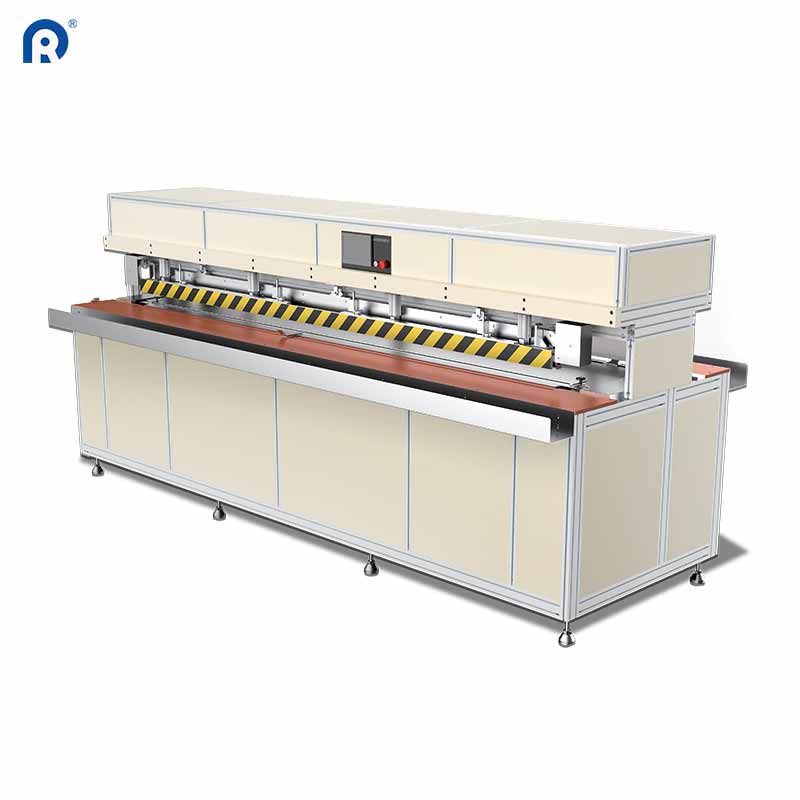
Build Material-Based Parameter Baselines
Optimizing roller blind welding starts with stable, repeatable parameter sets tied directly to fabric characteristics. Many production lines run on generic saved profiles that ignore subtle shifts in coating composition, fabric density, and surface treatment. A single profile that works well on blackout PVC fabric often creates weak seams or scorch marks when loaded onto lightweight sunscreen mesh. A practical baseline workflow separates each fabric grade into its own parameter group. Operators log coating thickness, ambient humidity at testing, and target peel performance, rather than only adjusting speed and heat on the fly. This method removes much of the guesswork during changeovers between fabric lots.
Stabilize Web Tension and Edge Tracking
Tension fluctuation ranks among the most common hidden sources of inconsistent roller blind welding quality. Minor slip on feed rollers, uneven fabric relaxation, or frame deflection can pull layers out of alignment before fusion completes. Even small misalignment accumulates over long seam runs and creates seams that look intact yet fail under repeated flexing. A shading fabric workshop in southern China ran into this exact issue during a batch of wide seamless panels. Random seam splitting appeared after cutting, even though visual inspection passed at the welding station. Review of production footage revealed slow tension drift as rolls unwound. Adding segmented tension feedback and optical edge guides reduced rejected panels noticeably, though fully stable output still requires regular guide roller cleaning and calibration.
| Control Setup | Alignment Error Risk | Rework Frequency | Best Fit Fabric Type |
|---|---|---|---|
| Manual fixed guides | High | Elevated | Thick, rigid coated fabrics |
| Basic optical tracking | Medium | Moderate | Medium-weight polyester blends |
| Closed-loop tension + vision tracking | Low | Reduced | Thin mesh and wide seamless panels |
Findings from textile joining research note that tension variation above a narrow threshold can drop seam peel strength below accepted performance benchmarks, especially for fabrics with low coating mass. This reinforces why tension control cannot be treated as a secondary adjustment.
Implement Staged Energy Delivery Instead of Fixed Output
Most entry-level welding systems apply constant energy along the full seam length. This simple approach struggles when fabric thickness or surface resistance changes slightly across the panel. Too much energy burns through thin sections, while insufficient energy leaves thicker spots only partially fused. Staged energy delivery splits the weld path into short segments, allowing the controller to modulate heat or ultrasonic amplitude according to real-time feedback. Three core adjustments support this strategy.
- Pre-warm segments for cold fabric entering the station.
- Peak energy zone set for the core fusion area.
- Gentle cooling hold to lock the bond before the fabric exits. This tuning style reduces thermal shock and residual stress that causes delayed seam cracking. It also narrows the gap between acceptable aesthetic appearance and mechanical durability.
Standardize Inline Testing and Sampling Rhythms
Spot checks taken only at the start of each roll miss gradual drift that builds through a production run. Machine horn wear, heater fouling, and slow voltage drift shift weld quality slowly over hours, with no obvious visual warning. A reliable sampling plan pulls specimens at consistent intervals and records peel results alongside machine readings. Tests do not rely only on hand pulling by operators. Simple fixture-based peel checks deliver consistent data that can flag drifting parameters before large batches become compromised. Operators also log environmental conditions such as workshop humidity, because moisture trapped inside coatings changes melting behavior. This structured testing routine turns random quality surprises into predictable maintenance triggers.
Schedule Condition-Based Maintenance for Welding Components
Degraded tooling quietly undermines otherwise well-tuned roller blind welding processes. Horn surface erosion, clogged hot-air nozzles, worn pressure rollers, and dusty vision lenses all degrade seam consistency over time. Waiting until visible defects appear usually means scrap has already accumulated. Condition-based maintenance uses run time and performance logs to trigger service. Nozzles get cleaned before airflow drops beyond tolerance, and contact rollers are resurfaced when pressure distribution becomes uneven. This avoids sudden quality drops that force emergency line stops. Ridong designs equipment platforms with accessible wear parts and built-in performance logging to support this steady maintenance rhythm across different production environments.


