
 EN
Clarify Fabric and Cut Accuracy Requirements First
Finding reliable roller blinds cutting suppliers begins with locking down clear technical requirements before outreach. Many sourcing teams send generic inquiries without defining fabric types, allowable edge defects, and tolerance thresholds, which leads to mismatched samples and wasted negotiation cycles. Different blind fabrics behave differently during cutting. Blackout PVC coatings melt easily under heat cutting, while mesh sunscreen fabrics tend to fray when cut with plain mechanical blades. A stable specification sheet should list target cut tolerance, acceptable edge condition, and the full range of substrates the equipment must process. This simple step filters out vendors whose platforms only support narrow material ranges.
Distinguish Actual Manufacturers from Intermediary Traders
A large share of listings for roller blinds cutting equipment come from trading firms that do not control assembly, calibration, or spare part stock. These middle parties often rely on third-party workshops to fulfill orders, which creates delays and inconsistent technical support when adjustment work is needed. A window covering producer in the Yangtze River Delta learned this during a previous sourcing round. The team selected a low-priced supplier online, only to discover after delivery that the equipment could not maintain consistent straight cuts on wide zebra fabric. Follow-up troubleshooting moved slowly because the sales team had no direct access to assembly engineers, and component replacement required coordination with an unseen factory. Direct verification of workshop footage, production logs, and in-house test benches helps avoid this trap.
| Supplier Type | Technical Tuning Speed | Spare Part Lead Time | Risk of Performance Drift |
|---|---|---|---|
| Trading intermediary | Slow | Longer | Higher |
| Small contract assembler | Moderate | Variable | Medium |
| Integrated equipment manufacturer | Fast | Predictable | Lower |
ISO 9001 audit guidance for textile machinery notes that traceable production records and in-house performance testing act as core markers of stable output capability. Vendors that cannot provide recent test records usually struggle to replicate consistent cutting results across batches.
Evaluate Compatibility with Existing Production Workflows
Even a high-precision cutting unit fails to deliver value if it cannot connect smoothly with upstream unwinding stations and downstream welding or stacking steps. Key points to check include signal interfaces, web speed matching, and space footprint on the shop floor. Some cutting platforms only support standalone operation and lack signal synchronization, forcing extra manual handling between stations. Three practical workflow questions help narrow candidates quickly.
- Can the cutting system receive position signals from upstream unwinding controls?
- Does it share compatible safety protocols with existing automated lines?
- Can software parameters be saved and recalled for repeated fabric jobs? Compatibility checks reduce costly retrofits after installation and limit disruption to established production rhythms.
Assess Sample Testing and Validation Protocols
Not all suppliers run sample cutting under conditions that mirror real factory environments. Some demo tests use clean, low-humidity workshop space and premium fabric rolls to show ideal results, while regular production faces fluctuating humidity, dust, and bulk raw fabric variations. Serious vendors accept sample runs using the buyer’s own fabric, with logging of cut quality across multiple continuous cycles. Reports should capture edge fraying, dimensional deviation, and any thermal distortion for heat-based cutting styles. Buyers should also request test data across slower and faster operating states, to understand where the machine’s accuracy starts to degrade. This exposure to real-world limits prevents unrealistic expectations.
Review Long-Term Technical Enablement Structure
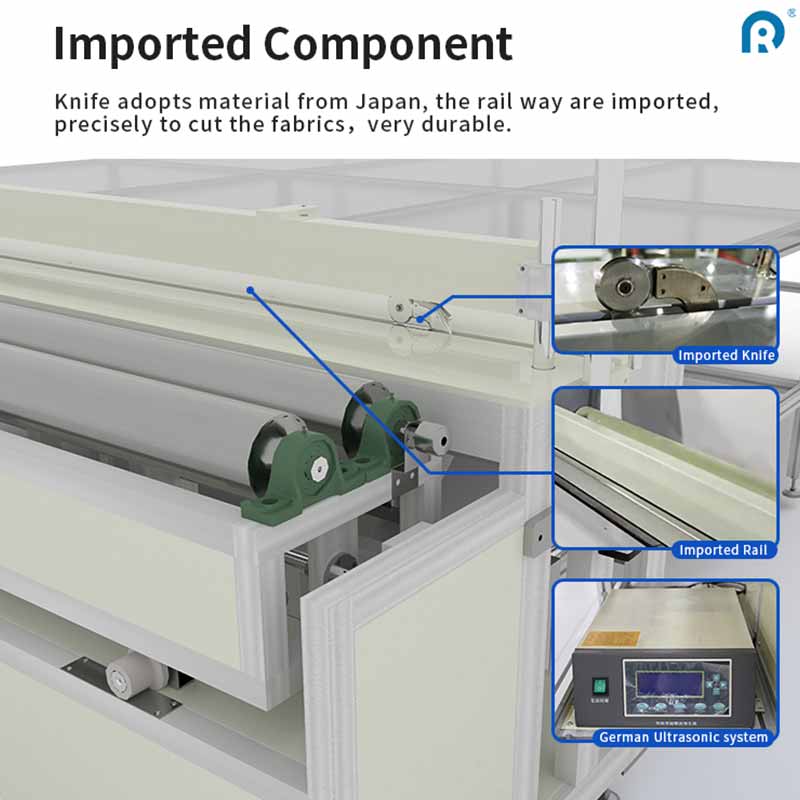
Equipment reliability extends far beyond the moment of delivery. Cutting heads, drive belts, sensors, and guiding rollers all wear over time. Suppliers that only provide basic operation manuals leave production teams stuck when subtle drift develops. Strong support includes documented calibration routines, accessible spare part lists, and remote diagnostic channels for software or alignment issues. This does not require round-the-clock on-site attendance. Clear documentation and responsive engineering communication often deliver more consistent value than infrequent emergency visits. Ridong maintains structured technical enablement channels and standardized component sourcing to support roller blind fabric cutting setups across varied production environments.


