
 EN
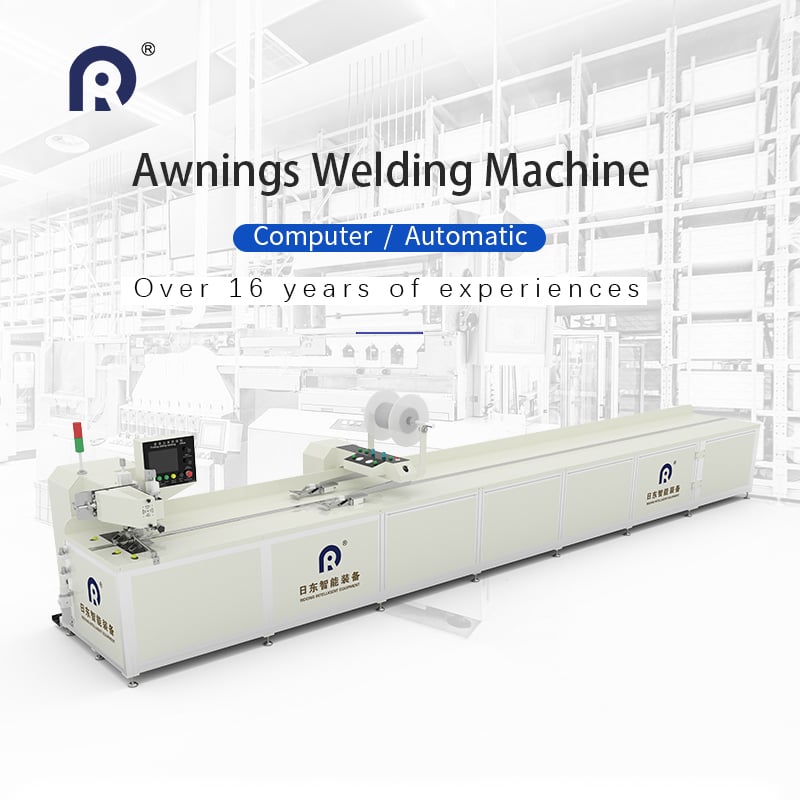
Material Variability and Coating Behavior
Seamless roller blind welding relies on consistent melting and fusion of thermally responsive coatings woven into base fabrics. Even fabrics marked under the same product code can carry subtle shifts in coating thickness, additive ratios, or surface contamination that alter how heat or ultrasonic energy transfers during bonding. Some sunscreen fabrics include UV stabilizers that raise melting points, while budget coated substrates soften rapidly and discolor if energy input drifts upward. A fabric that passes peel testing early in a production run may start producing fragile seams later when ambient humidity rises, as moisture trapped inside the coating creates tiny gas pockets that break the molecular bond. Operators often mistake these failures for machine calibration drift before tracing the root cause to incoming raw material batches.
Tension Stability Across Long Weld Paths
Uniform web tension stands as one of the hardest variables to hold steady during continuous seamless roller blind welding. Fabric stretches unevenly when tension spikes, pulling the two edges out of alignment before the weld sets. Too little tension allows wrinkling and overlapping, which creates hidden thick spots that either burn through or remain only partially fused. A field observation from a window covering workshop illustrates this clearly. During a wide-format blind production trial, operators noticed random seam failure concentrated near the midpoint of each long panel. Inspection revealed slight frame deflection under the weight of the rolled fabric, which created a slow tension gradient along the travel path. Minor frame rigidity upgrades and segmented tension sensing reduced rework noticeably, though full elimination requires active closed-loop adjustment.
Heat and Energy Distribution Consistency
Both hot-air and ultrasonic seamless welding methods struggle with even energy delivery over extended seam lengths. Hot systems suffer from nozzle airflow variation, while ultrasonic setups see horn wear and frequency detuning that reduce local fusion quality. The result is a seam that looks visually uniform but fails peel testing at scattered points.
| Welding Method | Typical Defect Pattern | Sensitivity to Speed Change | Usable Coating Range |
|---|---|---|---|
| Hot air welding | Glossy overheated strips, cold weak spots | High | Medium to thick PVC coated |
| Ultrasonic welding | Whitened brittle zones, incomplete edge fusion | Moderate | Thin polyester and sunscreen fabrics |
Data from textile joining research published in applied sciences notes that energy variation as small as 7 percent along the seam can push joint strength below acceptable thresholds for repeated rolling and flexing cycles. This margin leaves little room for unplanned drift in transducer output or heater performance.
Post-Weld Cooling Stress and Delayed Failure
Many seamless roller blind welds pass immediate quality checks only to split days or weeks later once residual stress releases. Fusion zones shrink at a different rate than the surrounding fabric as they cool, building microcracks along the seam boundary. This risk climbs when finished panels roll tightly before the bond reaches full stabilization. Some fabric grades have high thermal memory. After repeated heating cycles from sunlight, internal stress accumulates and causes separation at the weld line. This failure mode proves tricky because it does not appear on standard in-line inspection stations that only test fresh samples.
Alignment Drift and Edge Tracking Errors
Submillimeter edge misalignment accumulates quickly on long-running seamless welding lines. Fabric edges can shift from static guides due to minor web slip, static charge, or uneven friction on support rollers. When the two fabric layers offset, only a narrow strip receives bonding energy, lowering total seam strength. Manual visual checking cannot catch small, gradual drift across hundreds of meters of output. Vision tracking hardware helps, but it needs regular calibration against fabric color changes, dust buildup on lenses, and minor light shifts inside the production space.
Balancing Visual Finish and Mechanical Strength
Customers expect seamless roller blind welds to remain nearly invisible, without shiny lines, discoloration, or stiff ridges. The settings that produce the cleanest, least noticeable seams often deliver the lowest peel resistance. Turning up energy to boost bond strength frequently leaves visible marks that reject the panel on aesthetic grounds. This tradeoff defines most production tuning work. Teams must lock in parameters that hit both aesthetic standards and mechanical durability for rolling operation. Ridong builds machine platforms with layered control logic to help production teams navigate this balance without constant manual parameter resetting across different fabric types.


