
 EN
EN
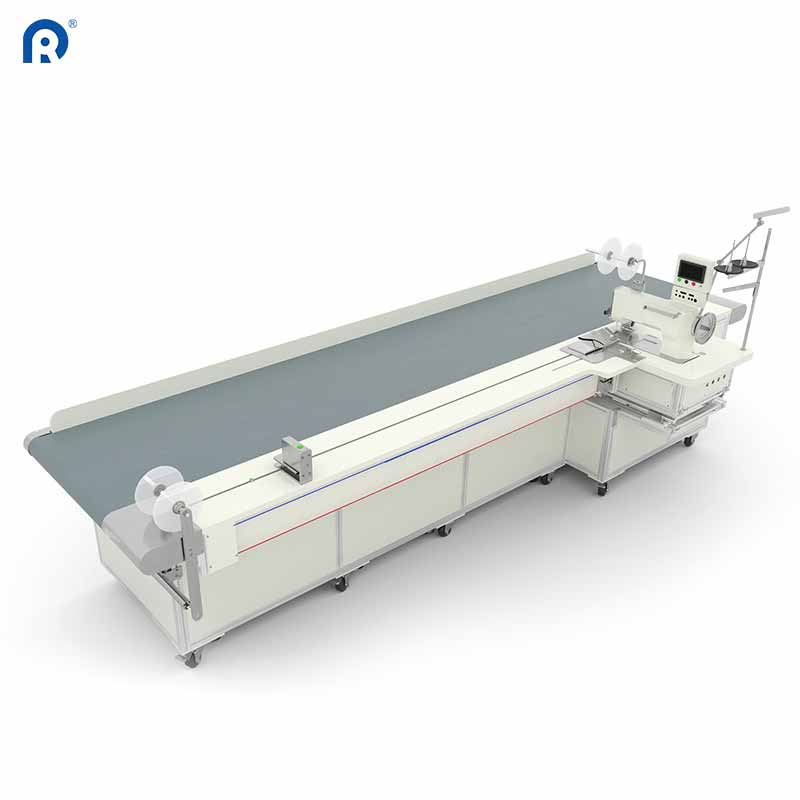
The Hidden Cost of Picking the Wrong Machine
A factory owner in Vietnam once called with a problem that sounded painfully familiar. He'd bought an automatic curtain making machine based on a glossy brochure and a price tag that looked too good to pass up. Eight months later, the machine was producing 30% fewer finished panels than the manual line it was supposed to replace. The operators hated it. The maintenance guy couldn't get spare parts. And the production manager had started sneaking work back to the old machines at night just to hit deadlines.
That story repeats itself more often than most equipment suppliers care to admit. The difference between a machine that pays for itself in eighteen months and one that becomes a very expensive paperweight isn't always obvious in the spec sheet. But it shows up in the numbers eventually.
What "Automatic" Actually Means on the Factory Floor
Automatic curtain making machines come in a spectrum that ranges from "push a button and watch" to "you still need a skilled operator, but the machine does the heavy lifting." The terminology gets fuzzy fast.
A fully automatic production line handles fabric feeding, cutting, hemming, pleating, and stacking with minimal human intervention. These systems typically integrate multiple stations—cutting table, sewing heads, folding mechanisms—into a single continuous flow. Semi-automatic machines, by contrast, might automate the cutting and hemming but still require manual fabric positioning between steps.
Here's what the distinction actually means for production throughput:
| Machine Type | Operators Required | Panels per 8-Hour Shift | Changeover Time | Typical Payback Period |
|---|---|---|---|---|
| Manual (baseline) | 4–5 | 180–220 | N/A | N/A |
| Semi-automatic | 2–3 | 280–350 | 45–60 min | 12–18 months |
| Fully automatic | 1–2 | 400–500+ | 15–25 min | 18–24 months |
The numbers tell a clear story, but they also hide a catch. A fully automatic line only delivers those numbers when it's running consistently. Downtime kills the math. And downtime is exactly what happens when the machine doesn't fit the factory's actual production reality.
The Fabric Compatibility Question Nobody Asks Until It's Too Late
Curtain fabrics have changed more in the last five years than in the previous twenty. Blackout with foil backing. Thermal-insulated composites. Recycled PET blends. Acoustic panels with multiple laminated layers. A machine that handles 100% polyester beautifully might choke on a fabric with even a thin coating.
The critical factor here is the feeding mechanism. Automatic machines use either roller-based or conveyor-based fabric feeding. Roller systems work well for smooth, lightweight fabrics but struggle with textured or coated materials—the rollers can't maintain consistent grip, and the fabric drifts. Conveyor systems handle a wider range but cost more and require more floor space.
A practical test: before committing to a machine, run production samples through it using the heaviest and lightest fabrics the factory expects to process. Watch what happens at the feeding point. If the machine hesitates, slips, or produces uneven tension on either end of the spectrum, that's a red flag that no spec sheet will warn about.
Real Production Data from a Switch That Worked
A mid-sized factory in Poland that makes roller blinds for the European hospitality sector ran a controlled comparison before upgrading their automatic curtain making line. They ran the same fabric—a 280gsm blackout with acrylic coating—through their existing semi-automatic line for one week, then through a new fully automatic system the following week. Same operators. Same shift length. Same quality standards.
The results: the fully automatic line produced 38% more finished panels per shift. But the more interesting number was the defect rate. The semi-automatic line averaged 3.1% rejects—mostly uneven hems and misaligned pleats. The automatic line dropped that to 0.7%. The improvement came not from faster cutting or sewing speeds (those were actually comparable) but from consistent tension control and automated positioning that eliminated the variation introduced by manual fabric handling between stations.
That 2.4% reduction in defects translated to roughly 140 fewer rejected panels per month on their typical production volume. At their average selling price, that alone covered nearly 60% of the machine's monthly payment.
Maintenance Access and Parts Availability—The 40% of Cost That Doesn't Show Up on the Invoice
Equipment buyers love to compare purchase prices. That's natural. But the sticker price is only part of the story. The rest hides in maintenance costs, spare parts logistics, and the downtime that happens when something breaks.
A machine built with off-the-shelf components—standard motors, common sensors, widely available bearings—can usually be repaired within 48 hours, even in countries without a local service network. A machine built with proprietary parts that only the manufacturer supplies? That's a different story. One factory in South Africa waited eleven weeks for a replacement control board. The machine sat idle. The production backlog cost them more than the board itself.
The smart approach: ask the supplier for a list of every component that's likely to wear out within the first three years. Then check availability. If the answer is "we stock them at our headquarters," ask about shipping times. If the answer involves customs clearance and air freight costs, factor that into the total cost of ownership before signing anything.
Control Systems That Operators Can Actually Use
The most technically advanced automatic curtain making machine in the world is worthless if the operators can't run it without a degree in mechatronics. This sounds obvious, but it gets ignored more often than it should.
Touchscreen interfaces with intuitive menus beat complex keypad systems every time. Machines that store fabric presets—tension settings, stitch lengths, pleat spacing, hem widths—reduce changeover time dramatically and eliminate the guesswork that leads to inconsistent quality. One factory in Mexico cut their changeover time from 45 minutes to 12 minutes simply by upgrading to a machine with memory presets for their five most common fabric types.
The real test: hand the machine's control panel to an operator who's never seen it before and time how long it takes them to set up a basic production run. If it takes more than ten minutes with the manual in hand, that machine will create friction every single day. And friction on the factory floor translates directly to lost production.
When Automation Makes Sense—and When It Doesn't
Not every factory needs a fully automatic curtain making machine. The decision comes down to volume, variety, and labor availability.
Factories running high volumes of standardized products—think hotel chains ordering thousands of identical panels—benefit most from full automation. The setup cost gets amortized across huge quantities, and the consistency advantages show up in every batch.
Factories running low volumes of highly customized products—one-off residential jobs with unique dimensions and fabric choices—might be better served by semi-automatic or even manual equipment. The changeover time on a fully automatic line eats into the profit margin on small runs, and the machine never reaches the throughput levels that justify its cost.
The sweet spot for full automation is typically around 1,500 to 2,000 panels per month with fewer than ten distinct fabric or dimension combinations. Below that threshold, the numbers get harder to justify. Above it, the case becomes compelling.
For factories evaluating this decision, suppliers with deep manufacturing experience—like those that have equipped over 10,000 clients globally—can provide production data and ROI modeling specific to the factory's actual product mix. The right partner helps match the machine to the reality of the shop floor, not to a brochure's best-case scenario.
Table of Contents
- The Hidden Cost of Picking the Wrong Machine
- What "Automatic" Actually Means on the Factory Floor
- The Fabric Compatibility Question Nobody Asks Until It's Too Late
- Real Production Data from a Switch That Worked
- Maintenance Access and Parts Availability—The 40% of Cost That Doesn't Show Up on the Invoice
- Control Systems That Operators Can Actually Use
- When Automation Makes Sense—and When It Doesn't


