
 EN
EN
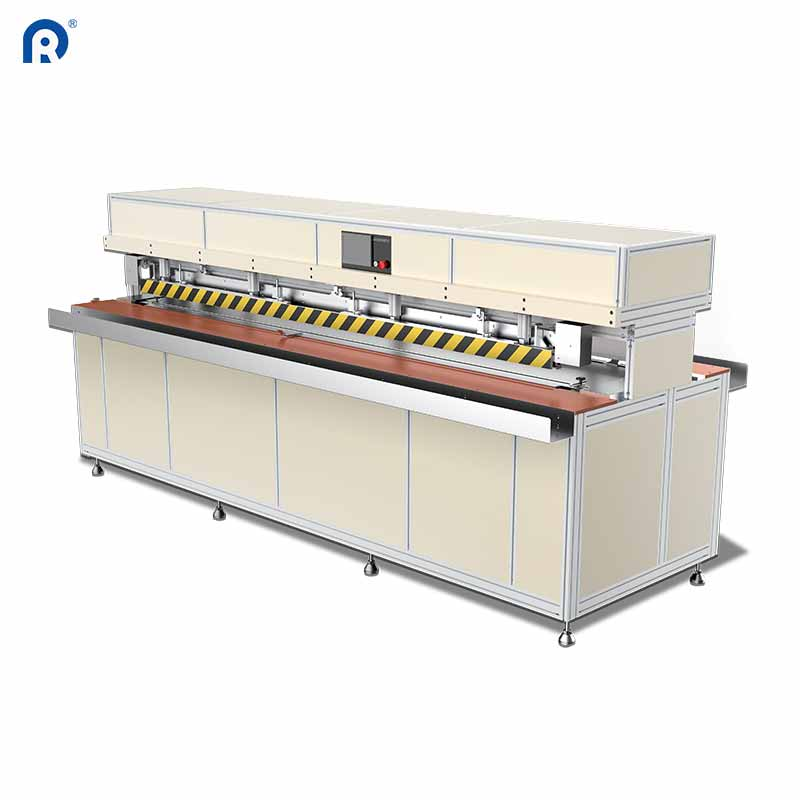
Why Automatic Roller Blind Welding Is Revolutionizing Manufacturing Efficiency
Automatic roller blind welding integrates precision robotics with material-specific welding protocols to solve three core manufacturing challenges:
- Accelerated Production Cycles: Automated systems operate up to 80% faster than manual welding—without fatigue-related slowdowns—enabling continuous, high-volume output and shorter lead times.
- Near-Zero Defect Rates: Programmable weld paths and real-time thermal sensors ensure consistent penetration depth across thousands of cycles, eliminating warping and weak seams. This cuts rework by 30–60% and significantly reduces scrap.
- Labor Optimization: Operators transition from hands-on welding to supervisory roles, managing multiple stations simultaneously. This reduces ergonomic injury risk, lowers training overhead, and increases per-worker output value.
The combined effect—higher throughput, less waste, and smarter staffing—delivers ROI in under 18 months for most installations, making automatic roller blind welding a foundational Industry 4.0 capability for scalable, precision-driven manufacturing.
Core Components Requiring Precision Welding in Roller Blinds
Precision welding directly determines long-term durability and operational reliability in roller blinds. Two assemblies demand exacting thermal control:
Aluminum and Steel Tube Seaming: Thermal Stress Control for Dimensional Stability
Aluminum header tubes expand up to 2.3% when heated—posing a high risk of warping if unmanaged. Modern automated systems use pulsed energy modulation to dynamically compensate, holding dimensional tolerances within ±0.1mm. This ensures precise alignment for smooth, repeatable blind retraction over 50,000+ duty cycles.
Bottom Rail Assembly: Ensuring Load-Bearing Integrity Through Consistent Joint Strength
Bottom rails must sustain 150N/m operational loads without joint failure. Precision welding applies uniform bead patterns across vinyl-aluminum interfaces, delivering consistent 18 MPa tensile strength. Integrity is verified post-weld using ultrasonic thickness mapping—a non-destructive method that confirms seam continuity and material homogeneity.
Welding Technologies Compared: Hot Air, High-Frequency, and Ultrasonic for Fabric Integration
Material-Specific Performance: PVC, Vinyl, and Blackout Fabrics Under Each Method
Choosing the right welding technique depends heavily on what kind of material we're working with. Hot air welding works really well for PVC materials because it gets those polymer chains going without messing up the flexibility or how strong the seams are after welding. Then there's high frequency welding which actually fuses materials at a molecular level, especially good for vinyl stuff. The results? Water tight joints that hold up pretty darn well. For blackout fabrics though, ultrasonic welding is probably the way to go since it doesn't generate much heat at all. Too much heat can ruin those special fabrics that block light so effectively, plus it might mess with how different layers stick together in the fabric construction.
| Method | PVC Performance | Vinyl Strength | Blackout Precision |
|---|---|---|---|
| Hot Air | High flexibility | Moderate | Low |
| High-Frequency | Moderate | High | Moderate |
| Ultrasonic | Low | Moderate | High |
Hybrid Systems (Ultrasonic + Hot Air): Enabling Reliable Multi-Layer Composite Bonding
Hybrid systems bring together the focused action of ultrasonic waves at the molecular level with the wide-reaching heat from hot air, making them really good at bonding tricky materials such as those foam backed blackout fabrics used in aircraft interiors. When these two methods work together, they stop layers from peeling apart when stretched and can make products last about 30% longer than what happens with just one method alone. With so many fabrics now made from multiple layers stacked on top of each other, manufacturers are finding that going hybrid isn't something extra anymore but actually necessary if they want their products to hold up both structurally and functionally over time.
Selecting the Right Automatic Roller Blind Welding System: Key Technical and Operational Criteria
Selecting an automatic roller blind welding system requires balancing technical capability with real-world operational impact. Critical evaluation criteria include:
- Thermal Management Precision: For PVC and blackout fabrics, systems with high-frequency modules deliver 0.1mm positional accuracy—preventing heat-induced fabric distortion during high-speed runs.
- Energy & Ergonomic Efficiency: Servo-driven systems reduce power consumption by up to 18% versus conventional drives while operating below 75dB—supporting both sustainability goals and safer, quieter workspaces.
- Quality Assurance Integration: Real-time error detection and adaptive feedback loops minimize material waste and eliminate downstream quality escapes.
- Throughput Scalability: Automated loading/unloading features increase cycle rates by 40% over manual handling—directly supporting demand-driven production scaling.
- Future-Proof Modularity: Prioritize platforms designed for seamless integration of new tooling or process upgrades as composite materials and smart-blind functionalities evolve.
FAQs on Automatic Roller Blind Welding
What exactly is automatic roller blind welding?
Automatic roller blind welding utilizes precision robotics and specific welding protocols to enhance efficiency in manufacturing blinds, offering advantages like fast production cycles and near-zero defect rates.
Why is precision welding crucial for roller blinds?
Precision welding ensures long-term durability and reliable operation in roller blinds, particularly vital for parts like aluminum and steel tubes and bottom rail assembly.
Which welding method is best for different roller blind materials?
Hot air welding is most effective for PVC, high-frequency welding is optimal for vinyl, and ultrasonic welding is ideal for blackout fabrics.
What are hybrid systems in welding?
Hybrid systems combine ultrasonic and hot air techniques to bond multi-layer composite materials reliably, providing extended product durability compared to using one method alone.
How do I select the right automatic roller blind welding system?
Consider factors like thermal management precision, energy efficiency, quality assurance integration, scalability, and modularity to select a suitable welding system.
Table of Contents
- Why Automatic Roller Blind Welding Is Revolutionizing Manufacturing Efficiency
- Core Components Requiring Precision Welding in Roller Blinds
- Welding Technologies Compared: Hot Air, High-Frequency, and Ultrasonic for Fabric Integration
- Selecting the Right Automatic Roller Blind Welding System: Key Technical and Operational Criteria
- FAQs on Automatic Roller Blind Welding