
 EN
EN
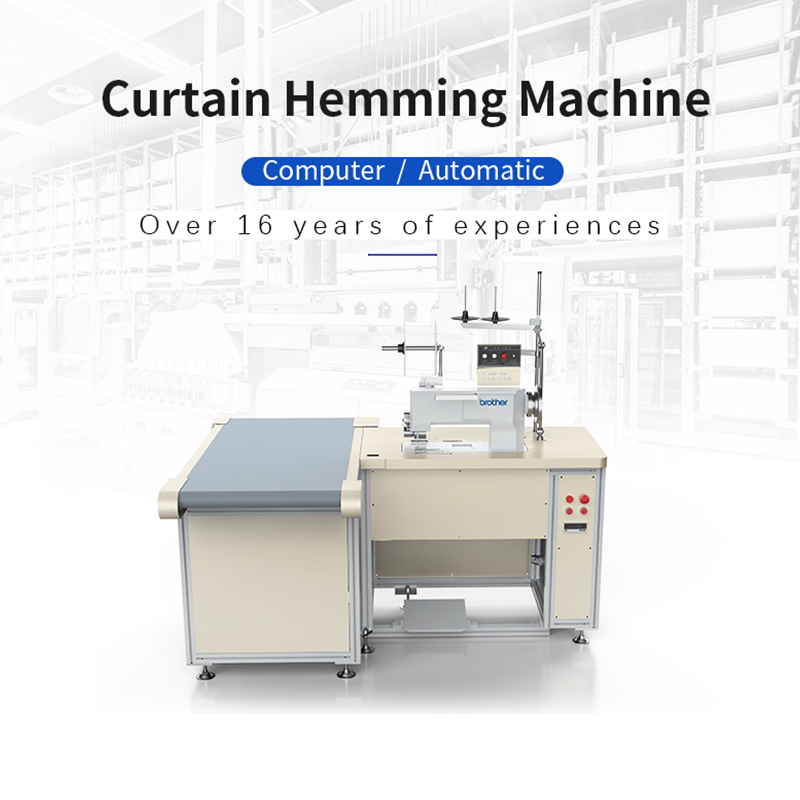
How a Curtain Hemming Machine Boosts Throughput and Ensures Consistency
Making industrial curtains requires both accuracy and fast turnaround, which is why many manufacturers turn to curtain hemming machines to boost their workflow. These automated platforms take care of all the fabric movement so workers don't have to handle materials manually anymore. The system basically ties together fabric feeding and stitching operations into one smooth process that runs nonstop. Factories report cutting down on production time by about two thirds when switching from hand methods to this automated approach. Plus, those fancy servo guided tension controls keep stitches looking consistent even after running through thousands of curtain panels without missing a beat.
Automated moving-platform workflow cuts cycle time by 65% vs. manual feeding
The machine comes with a programmable conveyor belt that moves fabric along at just the right speed so operators don't have to keep adjusting things manually. There are sensors built in too that spot where the fabric edges are and tweak the hem settings pretty accurately, staying within about half a millimeter of what's needed. This means no more having to fix stuff because something got off track during production. What really makes this setup valuable is how it lets one person handle as much work as three would normally do by hand. For factories struggling to find enough staff these days, especially when they need to produce large quantities quickly, this kind of automation can be a game changer.
Real-world ROI: Higher output + stitch uniformity reduce labor and QC costs
Consistent stitch quality reduces quality control failures by up to 32%, as quantified in apparel industry benchmarks. The table below contrasts operational impacts:
| Metric | Manual Hemming | Machine Hemming |
|---|---|---|
| Panels/hour | 22 | 73 |
| Rejection rate | 8.7% | 2.1% |
| Labor cost per 100 panels | $16.50 | $5.20 |
This precision engineering eliminates thread waste from uneven tension and reduces fabric consumption through sub-millimeter accuracy. Manufacturers report payback periods under 14 months when scaling beyond 15,000 panels monthly.
Long-Term Cost Reduction Through Precision Engineering in Curtain Hemming Machines
Servo-driven tension control and auto-calibration cut thread waste and rework by up to 32%
Curtain hemming machines built with precision engineering feature servo driven tension systems that automatically adjust the force pulling threads throughout the operation process. These adjustments help maintain consistent stitching quality even when working with different fabric weights ranging from light voile fabrics all the way to heavy blackout materials. The machines also come equipped with auto calibration sensors which constantly check how deep the needles go into the fabric and control feeding speed accordingly. This helps compensate for changes in material thickness as they happen. Compared to older mechanical models, such closed loop systems cut down on thread snapping problems by around 40 something percent. They also stop issues like fabric puckering and missed stitches that would otherwise require fixing later on. For businesses running large scale operations, these improvements actually translate into real savings. Just a small 1% decrease in wasted thread means saving roughly 1 mile plus of yarn each year per machine when running at normal production levels. When looking at everything together, manufacturers can expect to see thread usage drop by about 30% or so along with fewer instances needing correction work. This obviously cuts costs significantly both in terms of materials wasted and the time workers spend correcting defects.
Fabric Optimization: How Industrial Curtain Hemming Machines Minimize Material Waste
Sub-millimeter hem allowance control reduces fabric consumption by up to 4.2% per panel
Modern curtain hemming equipment saves fabric thanks to those fancy servo motors that can position stitches within about half a millimeter accuracy. No more those extra safety margins folks used to leave when doing things by hand - most workers would throw in around 10 to 15 mm just to be safe from getting uneven edges. These new machines actually have cameras that look at the fabric borders and automatically figure out how much hem allowance they need, so every seam ends up pretty much where it should be without wasting good material. Take a regular curtain panel needing a 20 mm hem for instance. With this tech, we're only talking about losing about half a millimeter on each side, which cuts down on fabric usage by roughly 4.2 percent per panel. Multiply that across something like 10 thousand panels being made, and factories end up saving around 420 meters worth of fabric overall. That means real money saved both on buying materials and dealing with all that leftover stuff later. Plus there's this tension control system built right in too, stopping those annoying puckers and stretches that happen during hemming. Most shops probably didn't realize it, but distorted fabric was actually causing about 7% of their scrap problems back in the day.
Industrial vs. Home Sewing Machines: Total Cost of Ownership for High-Volume Curtain Production
Downtime, maintenance, operator training, and scalability differences quantified
Scaling up curtain production makes industrial machines far more cost effective in the long run compared to home models. Take uptime as an example industrial curtain hemmers stay running around 98% of the time, while home units drop to about 76%, which means fewer interruptions and lost productivity. Maintenance is another big difference. Industrial machines get professional service every three months and can handle over 15,000 work hours before needing replacement parts. Home machines demand monthly attention from whoever operates them and usually break down completely after just 3,000 hours of use. Training expenses tell a similar story. Industrial equipment needs trained technicians who spend at least 40 hours learning proper operation techniques. For home models, someone can pick it up in less than 10 hours with basic instructions. When looking at scalability though, this really matters. A single industrial machine does the job of six to eight home units without taking up extra space on the factory floor. Operational costs go up steadily for industrial systems, but multiply fast when managing multiple home machines because each one demands separate maintenance and oversight.
| Cost Factor | Industrial Curtain Hemming Machine | Home Sewing Machine | Cost Impact (5-Year TCO) |
|---|---|---|---|
| Downtime | 2% production loss | 24% production loss | -$18.7k per machine |
| Maintenance | Quarterly professional service | Monthly user upkeep | -$9.2k in labor |
| Operator Training | 40+ hours certified training | <10 hours basic | +$3.1k initial outlay |
| Scalability | Linear cost increase | Exponential overhead | -$74k per 10 units added |
FAQ
What is a curtain hemming machine?
A curtain hemming machine is an automated device used in the manufacturing of curtains to streamline the process of fabric feeding and stitching, ensuring faster production times and consistent quality.
How does a curtain hemming machine improve productivity?
It improves productivity by integrating fabric feeding and stitching into a continuous operation, reducing manual handling, and allowing a single operator to manage tasks that would otherwise require multiple workers.
What are the benefits of using industrial curtain hemming machines over home sewing machines?
Industrial machines offer increased uptime, less maintenance, more thorough operator training, and better scalability, making them more cost-effective for high-volume production.
How does the precision engineering of these machines reduce costs?
Precision engineering reduces costs by minimizing thread waste and fabric consumption, ensuring stitch uniformity, and decreasing rework needed, thus cutting down on material expenses and labor costs.
Table of Contents
- How a Curtain Hemming Machine Boosts Throughput and Ensures Consistency
- Long-Term Cost Reduction Through Precision Engineering in Curtain Hemming Machines
- Fabric Optimization: How Industrial Curtain Hemming Machines Minimize Material Waste
- Industrial vs. Home Sewing Machines: Total Cost of Ownership for High-Volume Curtain Production
- FAQ