
 EN
EN
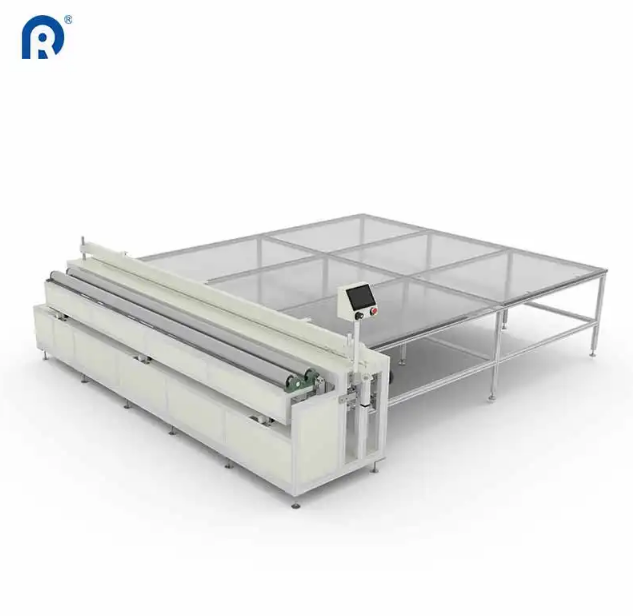
The Machine Decision That Shapes Production
Walking onto a curtain manufacturing floor tells a story before anyone speaks a word. The cutting area—whether organized chaos or calm precision—reveals everything about how that shop operates. Some floors hum with the whir of automated systems, panels moving through with mechanical consistency. Others rely on skilled hands guiding straight knives across fabric, each cut a testament to human craftsmanship.
Neither approach is inherently right or wrong. The choice depends on what a shop produces, at what volume, and for whom. But understanding the real trade-offs—beyond the marketing brochures and sales pitches—makes the difference between an equipment investment that pays off and one that becomes an expensive headache.
The global industrial fabric cutting machine market is projected to reach approximately $8.29 billion by 2033, growing at a compound annual rate of about 7.8%. That growth reflects a fundamental shift: more manufacturers are moving away from manual cutting, but not all of them are making the transition wisely.
Blade-Based Cutting: The Workhorse That Keeps Going
Straight-knife cutting machines have been around for decades, and for good reason. They're simple, durable, and get the job done across a wide range of materials.
The upsides: Blade systems handle heavy fabrics—blackout curtains,多层复合面料, upholstery-weight textiles—without breaking a sweat. Operating costs stay low because replacement blades are inexpensive and widely available. Repairs are straightforward; any competent maintenance person can keep a blade-based machine running. For shops running mostly standard materials in high volume, these machines deliver reliable output at a predictable cost per cut.
The downsides: Blades dull over time, and dull blades mean ragged edges, inconsistent cuts, and more fabric waste. They don't seal edges, so materials that fray require separate finishing steps. Speed is limited compared to laser or ultrasonic options. And while the machines themselves are affordable, the labor cost per cut stays higher because operators need to manage fabric feed, positioning, and quality checks throughout the process.
Laser Cutting: Precision at a Premium
Laser cutting entered the textile industry as a specialty tool and has steadily moved into mainstream production. The technology appeals to manufacturers producing high-end curtains where edge quality and pattern precision matter most.
The upsides: Laser cutters deliver exceptional precision—tolerances down to about 0.1mm. The heat from the laser melts and seals fabric edges simultaneously, eliminating fraying and the need for post-cut finishing. This edge-sealing effect can reduce material waste by roughly 12% when processing delicate fabrics like lace. For intricate patterns, scalloped edges, or decorative perforations, laser cutting opens possibilities that mechanical blades simply cannot achieve.
The downsides: The upfront investment is substantial. Laser systems cost significantly more than blade-based alternatives and require more maintenance—optical components degrade, cooling systems need attention, and power consumption runs higher. Not all fabrics play well with lasers; materials containing PVC or certain synthetics can release harmful fumes when cut. And laser cutting is slower than blade systems for straight-line, high-volume work. It excels at complexity, not sheer throughput.
Ultrasonic Cutting: The Sealing Advantage
Ultrasonic cutting uses high-frequency vibration to slice through fabric while simultaneously welding the cut edges. This dual action makes it particularly attractive for synthetic materials that tend to fray or unravel.
The upsides: The cut-and-seal capability eliminates an entire production step for many synthetic blends. No separate edge-finishing operation means faster throughput and lower labor costs. The technology handles sheer polyester blends exceptionally well, producing neat, finished edges straight off the machine. Ultrasonic systems also work cleanly—no smoke, no fumes, no blade dust.
The downsides: Ultrasonic cutting doesn't perform as well on natural fibers like cotton or linen. The sealing effect that works beautifully on synthetics can create stiff, ugly edges on natural materials. The machines are also less effective on thick, multi-layer stacks. For shops that work primarily with natural fabrics, ultrasonic technology offers limited value relative to its cost.
CNC-Controlled Systems: Consistency at Scale
CNC-controlled cutting machines represent the convergence of mechanical cutting with digital precision. These systems use computer numerical control to execute programmed cutting patterns with minimal operator intervention.
The upsides: Consistency is the headline feature. CNC cutters maintain accuracy within roughly 0.5mm across full production shifts. Once a pattern is programmed, the machine reproduces it exactly, order after order. Throughput improves dramatically—these systems can process around 120 meters of fabric per hour, roughly three times faster than manual methods. Modern CNC systems include auto-calibration for mixed fabric batches, real-time tension monitoring, and pressure-sensitive blades that adjust force based on material density. The result: labor cost reductions of up to 40% in many installations.
The downsides: The initial investment is significant, and programming requires skilled operators. The machines are less flexible than manual cutting for truly one-off custom work—setting up a new pattern takes time. And when something goes wrong, repairs are more complex and expensive than on simpler blade systems. CNC cutting works best for shops with predictable, repeatable production runs.
A Side-by-Side Comparison
The choice between cutting technologies comes down to what a shop actually produces. Here's how the options stack up across key dimensions:
| Factor | Blade-Based | Laser | Ultrasonic | CNC-Controlled |
|---|---|---|---|---|
| Upfront cost | Low | High | Medium | High |
| Operating cost | Low | Medium-High | Medium | Low-Medium |
| Cutting speed (straight lines) | High | Medium | Medium | High |
| Edge quality (fraying) | Poor | Excellent | Excellent | Depends on blade |
| Material versatility | High | Medium | Limited (synthetics) | High |
| Maintenance complexity | Low | High | Medium | High |
| Labor requirement | High | Low | Low | Very low |
The Real-World Trade-Off That Most Guides Miss
Here's what equipment comparisons rarely address: the technology that looks perfect on paper might be completely wrong for a specific shop's reality.
A manufacturer producing 5,000 identical blackout panels per week needs blade-based or CNC cutting—speed and low per-cut cost matter more than edge sealing. A boutique shop making custom silk drapes for high-end hotels needs laser precision—edge quality and pattern accuracy justify the higher cost per cut. A factory running mostly polyester sheers should look seriously at ultrasonic—the cut-and-seal capability eliminates a separate finishing step and pays for the equipment over time.
The mistake that costs shops the most money? Buying the machine that worked for a competitor without running their own numbers. Production volume, fabric mix, order patterns, and operator skill levels all factor into the right choice. There's no universal "best" machine—only the best machine for a particular set of circumstances.
When the Numbers Don't Add Up
Automation isn't always the answer. For shops with highly variable order volumes, frequent design changes, or predominantly custom work, the flexibility of skilled manual cutting often beats the consistency of automation. The breakeven point varies widely, but a rough rule of thumb: shops cutting fewer than 100 panels per day often struggle to justify the investment in automated systems. At 200+ panels daily, the math starts to work. At 500+, automated cutting becomes almost mandatory to remain competitive on cost.
Ridong has supplied curtain cutting equipment to manufacturers across more than 100 countries since 2007. Their experience across diverse production environments—from small custom workshops to high-volume industrial facilities—offers a practical perspective on matching cutting technology to real production needs.
Table of Contents
- The Machine Decision That Shapes Production
- Blade-Based Cutting: The Workhorse That Keeps Going
- Laser Cutting: Precision at a Premium
- Ultrasonic Cutting: The Sealing Advantage
- CNC-Controlled Systems: Consistency at Scale
- A Side-by-Side Comparison
- The Real-World Trade-Off That Most Guides Miss
- When the Numbers Don't Add Up


