
 EN
EN
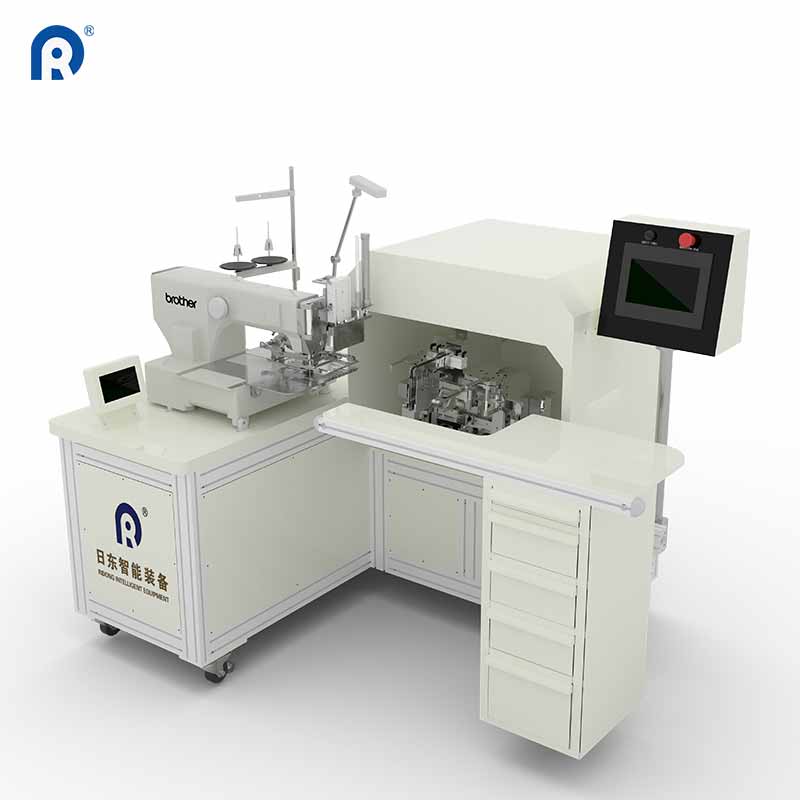
The Sewing Station That Everyone Forgets to Optimize
Walk through most curtain factories, and the cutting department gets all the attention. New ultrasonic tables, fancy nesting software, glossy brochures about precision. But walk five steps further to the sewing station, and the scene often looks like it hasn't changed in twenty years. Operators hunched over machines, manually feeding fabric, stopping to adjust tension, re-threading after breakages, measuring pleat spacing with tape measures.
Here's the thing: sewing typically consumes more floor time than cutting. A lot more. In a typical mid-volume operation, sewing and finishing can account for 45–55% of total production labor. Yet it's the area where automation investment often lags behind.
That gap is starting to close. Automatic curtain sewing machines—particularly those handling hemming and pleating—are finally catching up to what cutting automation achieved a decade ago. The technology is mature enough that the question is no longer "should we" but "how soon."
What Automatic Hemming Actually Does Differently
The automatic curtain hemming machine isn't just a sewing head on a conveyor belt. The real engineering is in the synchronization. The tug device, the conveyor, and the sewing head all run at matched speeds. Fabric moves through without puckering, without stretching, without the operator having to pull or guide.
The result shows up in the finished edge. Consistent stitch density, perfectly straight hems, and no wave along the bottom edge—the kind of quality that used to require a senior operator with ten years of experience.
Japanese Brother sewing heads are common in this class of equipment for a reason. The build quality and stitch consistency are well-documented. But the automation layer matters just as much. The machine handles thick fabrics—velvet, jacquard, multi-layer blackout—without the needle deflection or thread breakage that plagues standard industrial machines.
A shop that switched to an automated hemming unit reported daily panel output climbing from 22 to 58 panels after bringing in the equipment. That's not incremental improvement—that's a different league of production entirely.
The Pleating Problem That No One Solved—Until Now
Pleating has always been the craft bottleneck in curtain making. Manual pleating requires measuring, folding, pressing, and sewing—each step introducing variability. Three different operators will produce three different pleat depths, even working from the same specifications.
Automatic pleating machines change this fundamentally. The modern versions come with touchscreen controls where the operator enters fabric length, finished curtain length, and desired pleat count. The onboard intelligence calculates optimal pleat depth, spacing, and sewing points automatically.
No more measuring tapes. No more mental math. No more "close enough."
The machine handles single, double, and triple pinch pleats. Triple pleats, in particular, have traditionally been the domain of high-end workrooms because they're labor-intensive and skill-dependent. With automation, they become a standard option that any shop can offer.
Production numbers tell the story: some automated pleating systems can produce 8,000 to 10,000 pleats in a 12-hour shift. That's the equivalent of 8 to 15 manual operators. The labor savings alone often pay for the machine within the first year.
A Factory Floor Comparison: Before and After
Here's what the numbers look like when a shop replaces manual sewing operations with automated equivalents. These figures come from a 40-person curtain factory that made the transition over six months:
| Operation | Manual (per 8-hour shift) | Automated (per 8-hour shift) | Change |
|---|---|---|---|
| Hemming output (panels) | 45–55 | 110–130 | 2–2.5x increase |
| Pleating output (pleats) | 600–800 | 2,000–2,500 | 3x increase |
| Rework rate | 6–9% | 1–2% | 70–80% reduction |
| Operators assigned | 6–7 | 3–4 | ~50% reduction |
| Training time for new hires | 4–6 weeks | 1–2 weeks | 60–70% faster |
The global cloth cutting machine market—which includes automated sewing and finishing equipment—is projected to grow at a CAGR of 5.5% from 2025 to 2031. That growth reflects a broader shift: factories that don't automate sewing are losing ground to competitors who do.
Where Automation Doesn't Replace Skill (And Shouldn't)
Here's the honest take that equipment sales brochures rarely mention: automatic sewing machines don't eliminate the need for skilled operators. They change what those operators do.
The machine handles the repetitive, high-precision stitching. But someone still needs to:
-
Load fabric correctly. Misaligned loading creates misaligned stitching, and the machine won't correct for operator error.
-
Select the right settings for each fabric type. Different weights, weaves, and compositions require different tensions, speeds, and needle sizes.
-
Monitor quality in real time. The machine runs consistently, but fabric defects, thread issues, or subtle misalignments still need human eyes.
-
Perform routine maintenance. Cleaning, oiling, and replacing worn parts keep the machine running at spec.
The best shops treat automation as a force multiplier, not a replacement. The skilled operator becomes a supervisor and troubleshooter rather than a repetitive-task worker. That's a promotion, not a demotion.
Making the Business Case for Sewing Automation
The ROI calculation for automatic sewing machines is more straightforward than many shop owners expect. Here's the breakdown:
Labor savings are the biggest line item. If a manual hemming operation requires three operators and an automated version requires one, that's two salaries saved per shift. For a two-shift operation, the annual savings run well into five figures.
Throughput gains matter just as much. Faster production means more orders shipped per week, shorter lead times, and the ability to take on larger contracts without adding headcount.
Quality consistency reduces rework. Rework is expensive—it consumes material, labor, and time that should be going to new production. Cutting rework from 8% to 2% effectively adds 6% more capacity at no additional cost.
Training efficiency is an underappreciated benefit. New operators can be productive within days rather than weeks. That matters in markets where skilled labor is hard to find and retain.
What to Look For in an Automatic Sewing Machine
Not every automatic sewing machine delivers the same results. Here are the features that separate reliable production equipment from trouble-prone machines:
-
Japanese or German sewing heads. The core stitching mechanism determines everything downstream.
-
Synchronized feed systems. The conveyor, tugger, and head must work in harmony.
-
Adjustable settings for fabric variation. Thick fabrics and thin fabrics shouldn't require machine reconfiguration.
-
User-friendly controls. If the interface requires a manual to navigate, training time multiplies.
-
Sturdy frame construction. Vibration kills precision. Heavy, stable frames maintain accuracy over years of use.
Shops that prioritize these features consistently report fewer breakdowns, lower maintenance costs, and faster ROI. Those that cut corners on build quality end up with machines that spend more time being repaired than producing.
For manufacturers looking to upgrade their sewing operations, Ridong provides a comprehensive range of automated hemming and pleating equipment built around real-world production demands. With more than two decades of experience in sunshade equipment manufacturing and a presence in over 80 countries, the company's machines reflect the kind of reliability that only comes from continuous refinement across diverse factory environments.
Table of Contents
- The Sewing Station That Everyone Forgets to Optimize
- What Automatic Hemming Actually Does Differently
- The Pleating Problem That No One Solved—Until Now
- A Factory Floor Comparison: Before and After
- Where Automation Doesn't Replace Skill (And Shouldn't)
- Making the Business Case for Sewing Automation
- What to Look For in an Automatic Sewing Machine


