
 EN
Why Needle Holes and Glue Fumes Hold Back Modern Textile Lines
Walk onto the production floor of a technical textile plant making outdoor sunshades, liquid filter bags, or medical isolation gowns, and the limits of traditional sewing machines show up right away. Every time a steel needle punches through a coated polyester or polypropylene sheet, it leaves behind thousands of microscopic perforations along the seam. For a blackout roller blind, those tiny pinholes bleed bright sunlight around the hem bar. For a surgical barrier or chemical filtration sleeve, needle tracks become direct pathways for fluid leakage and bacterial contamination.
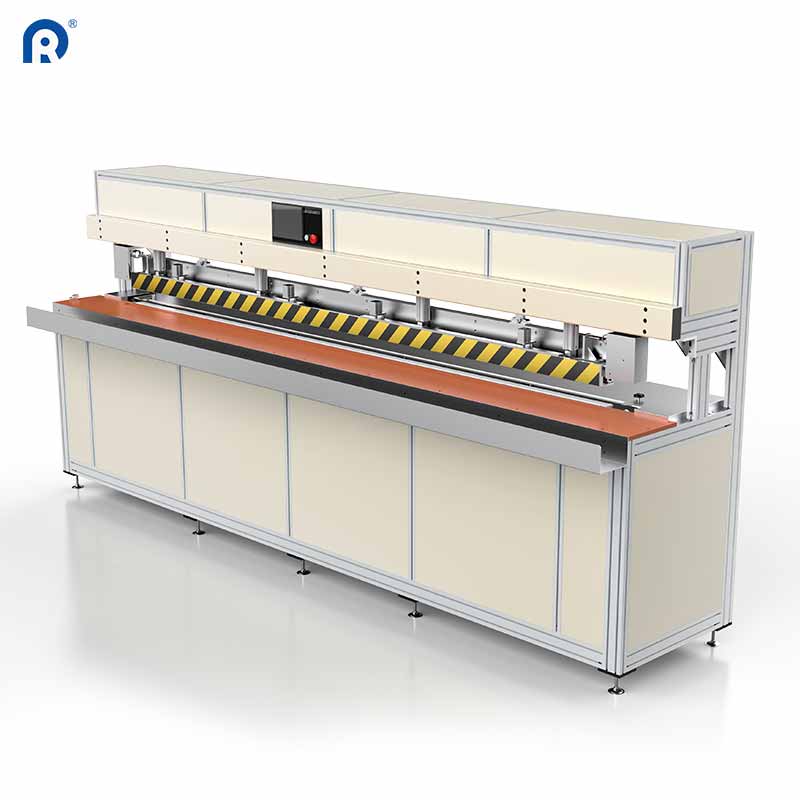
Replacing mechanical stitching with ultrasonic fabric welding equipment solves the perforation problem by bonding synthetic fibers at the molecular level without thread, adhesives, or external heaters. Instead of piercing the material or smearing solvent-based glue across the overlap, the machine channels high-frequency acoustic vibrations straight into the compressed seam line. The polymer chains inside the fabric heat up from internal friction, melt together in a fraction of a second, and solidify into a continuous, hermetic seal the moment pressure is released.
Beyond cleaner seams, dropping thread and glue cleans up the entire shop floor workflow. Operators no longer stop the line every twenty minutes to swap out empty bobbins, rethread snapped needles, or scrape sticky hot-melt residue off heated rollers. There are no volatile organic compounds venting into the workspace and no waiting around for liquid adhesives to cure on drying racks before packaging.
How High Frequency Acoustic Vibration Fuses Synthetic Polymers
The physics inside an ultrasonic welder relies on a carefully tuned acoustic stack made of three core parts: a piezoelectric converter, an amplitude booster, and a titanium or hardened steel sonotrode horn. First, an electronic generator converts standard fifty or sixty hertz mains electricity into high-frequency alternating current running at twenty,二十八, or thirty-five kilohertz. The converter uses piezoelectric ceramic discs to turn that electrical signal into rapid mechanical oscillations, which the booster amplifies and focuses onto the working face of the horn.
When two layers of thermoplastic textile pass between the vibrating horn and a patterned steel anvil wheel, the vertical movement measures only a few dozen microns. Yet at twenty thousand cycles per second, that microscopic hammering generates intense localized friction right where the two fabric layers touch. Because heat is generated inside the polymer interface rather than conducted from the outside in, the outer surfaces of the fabric stay relatively cool and retain their original texture.
Comparing standard textile joining methods against ASTM D751 hydrostatic seam testing and ASTM D1683 seam strength benchmarks illustrates why acoustic bonding dominates technical fabric assembly.
| Joining Method | Seam Barrier Integrity | Consumables Required | Thermal Distortion Risk | Edge Finish Capability |
|---|---|---|---|---|
| Traditional Lockstitch Sewing | Poor (needle perforations) | Thread, needles, bobbins | Zero | Requires separate overlocking |
| Hot Air Wedge Welding | High (melted overlap) | Hot-melt tape (optional) | High on thin synthetics | Weld only (no slitting) |
| Solvent Adhesive Bonding | Moderate to High | Liquid glue, primers | Low (chemical stiffening) | Messy squeeze-out at edges |
| Ultrasonic Rotary Welding | Excellent (hermetic fusion) | None | Very Low (internal heat) | Simultaneous slit and seal |
One major shop floor advantage is the ability to slit and weld in a single pass. By shaping half of the anvil roller with a knurled bonding pattern and the adjacent edge with a thirty-degree cutting bevel, the machine trims away excess selvage and fuses the seam edge simultaneously.
Lessons From an Industrial Filter and Shade Fabricator Upgrade
A clear example of how acoustic bonding transforms daily production comes from a contract manufacturer producing both pleated liquid filter cartridges and commercial PVC-coated zipper blinds. Originally, the factory ran twelve heavy-duty walking-foot sewing stations alongside two hot-air wedge welders to attach PVC side splines and bottom hem pockets. On the filter side, workers had to apply a secondary polyurethane seam tape over every stitched joint to pass bubble-point leak tests. On the window shade line, hot-air nozzles frequently scorched the light-colored acrylic coatings whenever an operator paused the feed roller for even half a second.
During an equipment overhaul, the engineering team installed four continuous rotary ultrasonic welding benches fitted with digital amplitude tracking and synchronized top-and-bottom puller rollers. For the polypropylene filter media, a diamond-knurled anvil wheel created a six-millimeter airtight seam in one pass without any backup tape. For the roller blind hem pockets and side retention zippers, a flat-faced titanium horn fused the thermoplastic welding tape straight to the solar screen without yellowing the visible side of the fabric. Within three months, bubble-test rejection rates on filter sleeves fell from six percent to under half a percent, while the blind assembly department cut its rework scrap by more than two-thirds.
Matching Material Composition and Anvil Patterns to the Job
While acoustic welding handles a huge range of technical textiles, experienced shop supervisors know that material chemistry dictates everything. Ultrasonic fusion only works reliably when the fabric contains at least sixty-five percent thermoplastic content, such as polyester, polypropylene, nylon, polyethylene, or PVC blends. Pure natural fibers like hundred-percent cotton, linen, or raw wool lack a melting phase and will simply char under high-frequency friction unless a thermoplastic adhesive film is sandwiched between the layers.
Process technicians keep seam quality consistent across changing fabric rolls by following three practical setup rules:
-
Match the anvil wheel knurl depth to the fabric thickness, using fine dot patterns for lightweight nonwoven medical gowns and deeper diagonal ribs for heavy coated tarpaulins or sunscreen meshes.
-
Balance pneumatic horn pressure against travel speed so the molten polymer isn't squeezed completely out of the weld zone, which creates a brittle, over-thinned seam line that tears under tension.
-
Pair materials with similar melting temperatures and molecular structures whenever joining dissimilar layers, ensuring both sheets reach their glass transition state at the exact same moment.
Another practical detail involves moisture and fabric finishes. Water-repellent silicone sprays or heavy fluorocarbon coatings can act as a lubricant between fabric layers, reducing interfacial friction and weakening the bond. Running a quick peel test on a scrap strip at the start of every new dye lot lets the operator dial in generator wattage before feeding full-sized panels.
Sourcing Stable Acoustic Stacks and Heavy Duty Welding Tables
Long-term reliability in an ultrasonic workstation comes down to generator frequency tracking and mechanical rigidity. As a titanium horn runs continuously through an eight-hour shift, it expands slightly from residual heat, causing its natural resonant frequency to drift. Cheap analog generators lose lock when that drift happens, leading to inconsistent cold welds or cracked piezoelectric crystals. Industrial-grade digital generators scan the horn frequency thousands of times per second, automatically adjusting output to keep amplitude rock steady regardless of fabric thickness variations.
Choosing a manufacturing partner who understands both acoustic physics and heavy textile handling is crucial for uninterrupted output. Dongguan Ridong Intelligent Equipment Co., Ltd. has spent nearly twenty years building specialized ultrasonic fabric welding machines, automated roller blind assembly lines, and heavy-duty cutting systems for global textile processors. By combining precision-machined titanium horns, intelligent digital ultrasonic generators, and stress-relieved steel table frames, Ridong delivers equipment that holds tight seam tolerances shift after shift. With thorough pre-shipment testing, responsive technical guidance, and dependable spare parts logistics, Ridong helps fabricators build stronger, cleaner textile products without production headaches.
Table of Contents
- Why Needle Holes and Glue Fumes Hold Back Modern Textile Lines
- How High Frequency Acoustic Vibration Fuses Synthetic Polymers
- Lessons From an Industrial Filter and Shade Fabricator Upgrade
- Matching Material Composition and Anvil Patterns to the Job
- Sourcing Stable Acoustic Stacks and Heavy Duty Welding Tables


