
 EN
EN
The Shift That Nobody Planned For
Roller blind manufacturing has always had a certain rhythm. Cut the fabric, sew the hems, attach the hardware, ship the order. For decades, that workflow served the industry well enough. But something changed over the past five years. Orders got more complex. Lead times shrank. And the pool of skilled sewing operators started drying up.
The bottleneck that caught most shops off guard was not cutting or assembly. It was the joining of fabric panels and the attachment of components like zippers and bottom rail pockets. Sewing worked, but it introduced failure points. Adhesives held, but they added curing time and material cost. The search for a better method led more manufacturers toward thermal welding, and the results have been anything but incremental.
A medium-sized roller blind producer in Eastern Europe made the switch somewhat reluctantly. Their manual welding setup—a handful of hot air tools and experienced operators—had been adequate for years. But when they landed a contract requiring consistent weld quality across tens of thousands of units, the limitations became impossible to ignore. The variability between operators was running at roughly 15 to 20%, and rework was eating into their margins. They installed an automatic roller blind welding machine, and within two months, the rework rate had dropped by a margin that surprised even the production manager.
What Automatic Welding Actually Does
The term “automatic roller blind welding” covers a range of technologies, but the core principle is consistent: controlled heat, pressure, and timing combine to fuse materials at the molecular level. Unlike sewing, which creates a mechanical joint with thread, thermal welding produces a homogeneous bond that matches the strength of the base fabric.
Impulse welding is one of the more common approaches in this space. The machine applies electrical current to heating bars for a precise duration, melting the PVC coating or welding tape, then allows the joint to cool under pressure. The result is a seam that is smooth, strong, and visually consistent. Hot air welding operates on a similar principle but uses a focused stream of heated air to activate the bonding layer.
The key difference with automatic systems is the elimination of operator-dependent variables. Temperature, pressure, feed speed, and cooling time are all set through programmable controls. The machine executes the same sequence every time. That repeatability is what transforms production economics.
The Numbers That Matter
The financial case for automatic welding often gets oversimplified. Faster production is the obvious benefit, but the real gains come from consistency and waste reduction.
Consider the scrap generated by inconsistent welds. A manual operation running two shifts might process a substantial number of panels daily. If the weld failure rate sits at 3 to 5%, that translates into a notable number of panels that require rework or scrapping each month. Each scrap panel represents material that was paid for, cut, and handled, yet never generated revenue.
One fabricator tracked their weld-related waste before and after transitioning to an automated impulse welding system. The baseline scrap rate hovered above 3%. After dialing in the machine parameters and training operators on the new workflow, that figure settled below 0.5%. The improvement did not come from faster cycle times—those remained roughly comparable. The gain came from eliminating the variation that manual methods inevitably introduce.
| Production Metric | Manual Welding Setup | Automatic Welding System |
|---|---|---|
| Weld consistency across shifts | Significant variation | Minimal variation |
| Rework rate (typical) | 3–5% of output | Less than 1% |
| Operator skill dependency | High | Low |
| Seam appearance uniformity | Variable | Consistent |
The pattern holds across multiple facilities that have made the transition. The consistency gains alone often justify the equipment investment within the first year.
What Changed for a Turkish Manufacturer
A roller blind producer in Turkey had been exporting to Western Europe for several years. Their products were well-regarded, but they kept losing bids on large contracts to competitors who could offer tighter quality guarantees. The issue traced back to their welding process.
They were using semi-automatic impulse welders with manual fabric feeding. The machines themselves were capable, but the manual handling introduced alignment errors. The operators had to position each panel by hand, and despite their experience, the placement varied enough to affect weld strength and appearance.
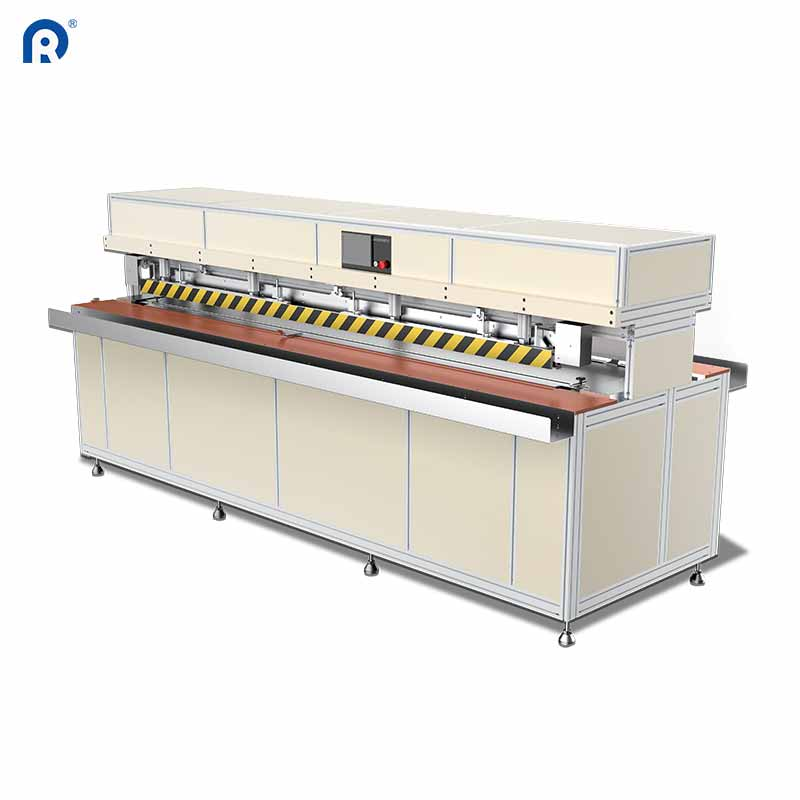
They upgraded to a fully automatic roller blind welding machine with PLC control and pneumatic fabric positioning. The machine now handles panel alignment, welding, and cooling in a single automated cycle. The result was not just better welds—it was the ability to document and reproduce those welds across every order. That documentation became a selling point with European buyers who valued traceability.
The unexpected benefit came in their inventory management. With consistent weld quality, they could finally standardize their panel dimensions without leaving extra material for “just in case” rework. That freed up storage space and reduced their fabric inventory by a meaningful margin.
What the Broader Market Shows
The welding equipment sector has been trending toward automation across the board. The global welding machinery market was valued at approximately $19.8 billion in 2025 and is projected to reach $29.6 billion by 2032, reflecting a compound annual growth rate of 5.9%. Within the textile and fabric joining segment, the shift is toward systems that reduce operator dependency and improve quality consistency.
Automation in welding is not just about replacing labor. It is about addressing a structural challenge: skilled welders are becoming harder to find, and the ones who are available command higher wages. Automating the welding process reduces exposure to that labor risk while simultaneously improving output quality.
Industry analysts have also noted that buyers are placing greater emphasis on equipment with features like programmable controls and diagnostic capabilities. These are not marketing frills—they reflect real operational needs. A machine that can store profiles for different fabric types and recall them on demand saves setup time and reduces the chance of operator error.
Where the Technology Has Limits
No machine is a silver bullet. Automatic roller blind welding works best with consistent material feeds and clean fabric surfaces. If the PVC coating varies in thickness from roll to roll, the machine's fixed temperature settings may need adjustment. If the fabric has been stored poorly and developed surface contamination, even the best welding parameters will underperform.
The machines also have a practical minimum run length. For shops doing one-off custom pieces, the setup time for an automatic welder might not make sense compared to a skilled operator with a handheld tool. The break-even point typically comes at higher production volumes—somewhere in the range of a few dozen panels per day, depending on the complexity of the weld. Below that threshold, the flexibility of manual methods still has its place.
Material compatibility is another consideration. Thermal welding is most effective on PVC-coated and certain synthetic fabrics. Natural fibers or heavily coated materials may not respond well to the process. Manufacturers should test their specific fabric types before committing to a fully automated setup.
Deciding Whether to Make the Move
The decision to automate roller blind welding comes down to a straightforward assessment: is the cost of variability higher than the cost of the machine? If rework, scrap, and inconsistent quality are eating into margins, the answer is likely yes.
The technology is mature. The data supports its adoption. And the industry trend is clear. The question is not whether automatic welding works—it is whether a given operation has reached the scale where the benefits outweigh the investment.
Ridong offers a range of automatic roller blind welding solutions designed for production environments where consistency and throughput matter. Their equipment is built around thermal welding systems that prioritize seam integrity and operational reliability, backed by a manufacturing approach that has served the window covering industry for years.


