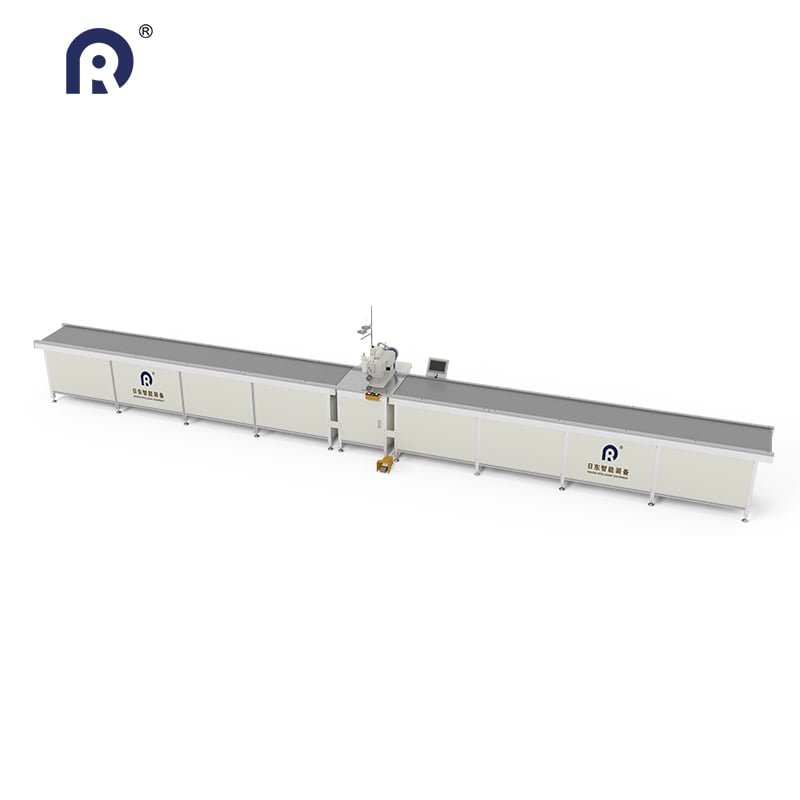
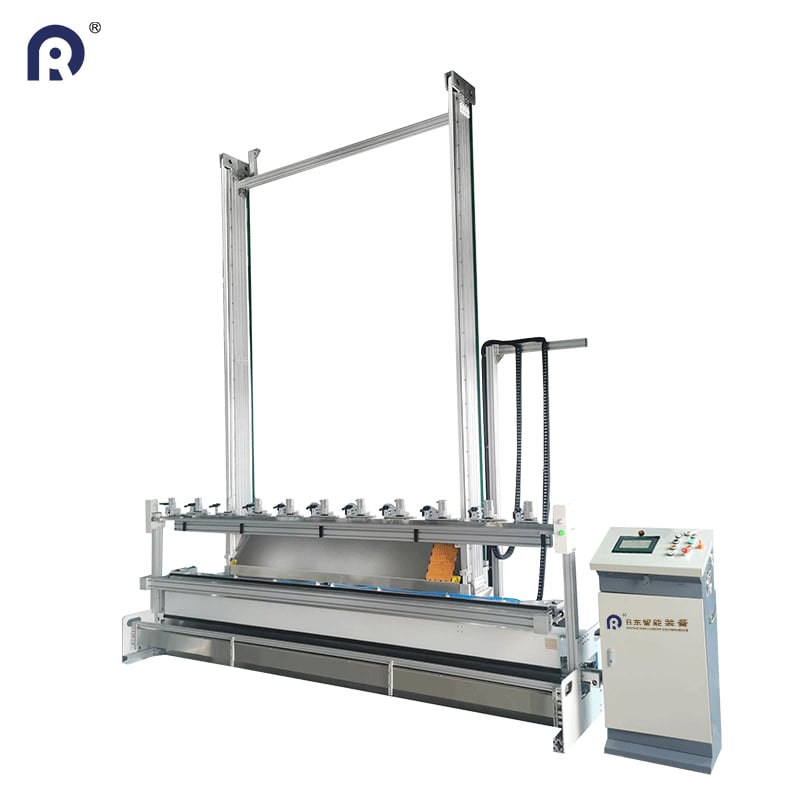
How Hande Group's ROLLERGY deployed a 160-roll intelligent fabric storage system by RIDONG. ERP-connected, cutting-line integrated, real-time inventory visibility. A Greater Bay Area Sunshade Alliance collaboration.

When a factory decides to automate its fabric storage, it's usually because someone did the math on how much time their operators spend walking between shelves.
At ROLLERGY — the zip screen manufacturing arm of Hande Group — that math got ugly fast. With over 160 active fabric rolls in inventory at any given time, spread across fifty different SKUs ranging from 1.2-meter PVC mesh to 3.2-meter acrylic-coated polyester, their operators were spending more time hunting for the right roll than actually cutting fabric. A single misplaced roll could stall an entire production batch.
That's where we came in.
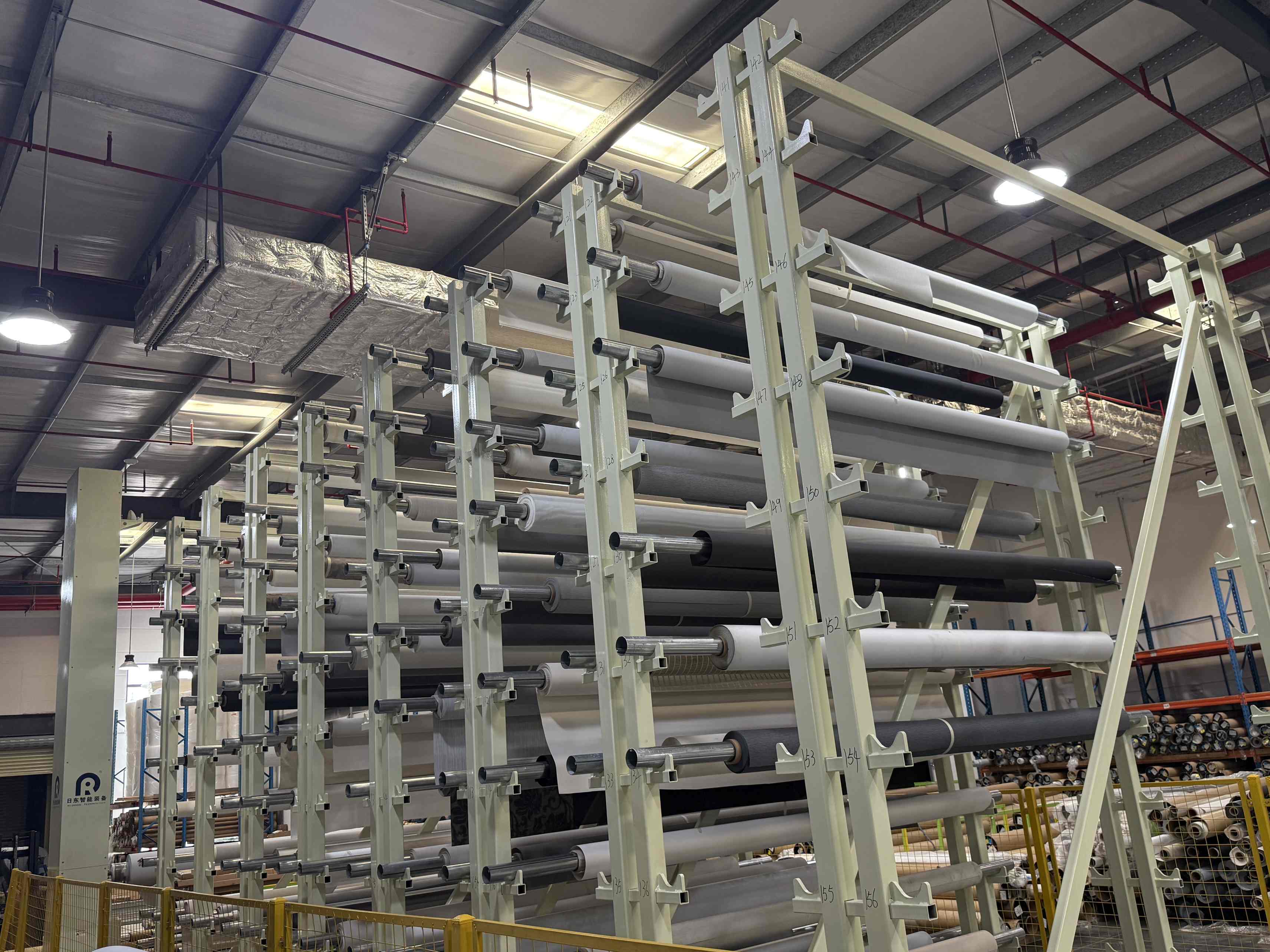
ROLLERGY produces high-end exterior zip screens for residential and commercial projects across China and Southeast Asia. Their product line demands an unusually wide range of fabrics — different colors, different coatings, different widths. Keeping 160 rolls organized, traceable, and instantly retrievable was becoming the bottleneck that limited everything else.
The old system was manual. Fabric rolls sat on industrial shelving units. Operators walked the aisles with a clipboard, checked the roll tag, and manually wheeled the selected roll to the cutting station. If a roll was in the wrong slot — and it happened more often than anyone wanted to admit — production stopped while someone played hide-and-seek with 80 kilograms of PVC-coated polyester.
They needed three things:
1. Instant retrieval. Any roll, to any cutting station, in under 60 seconds.
2. Real-time inventory. Knowing exactly how much fabric remained on every roll without unrolling it to measure.
3. ERP integration. The fabric storage data had to talk to their production planning system so orders could be matched to available stock automatically.
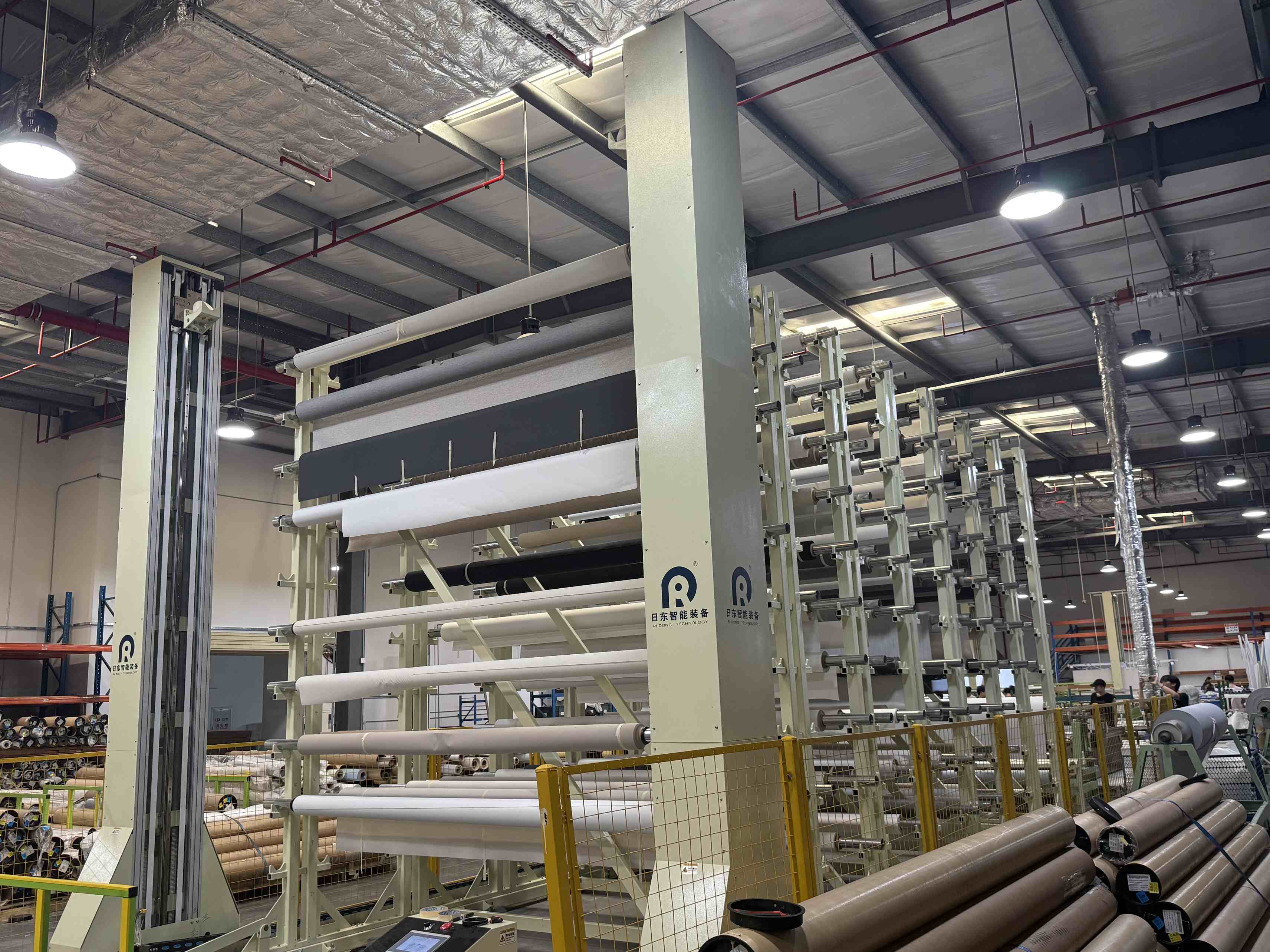
We designed and installed a fully customized Intelligent Fabric Roll Storage System with capacity for 160 rolls — sized to match ROLLERGY's current inventory plus 20% growth buffer.
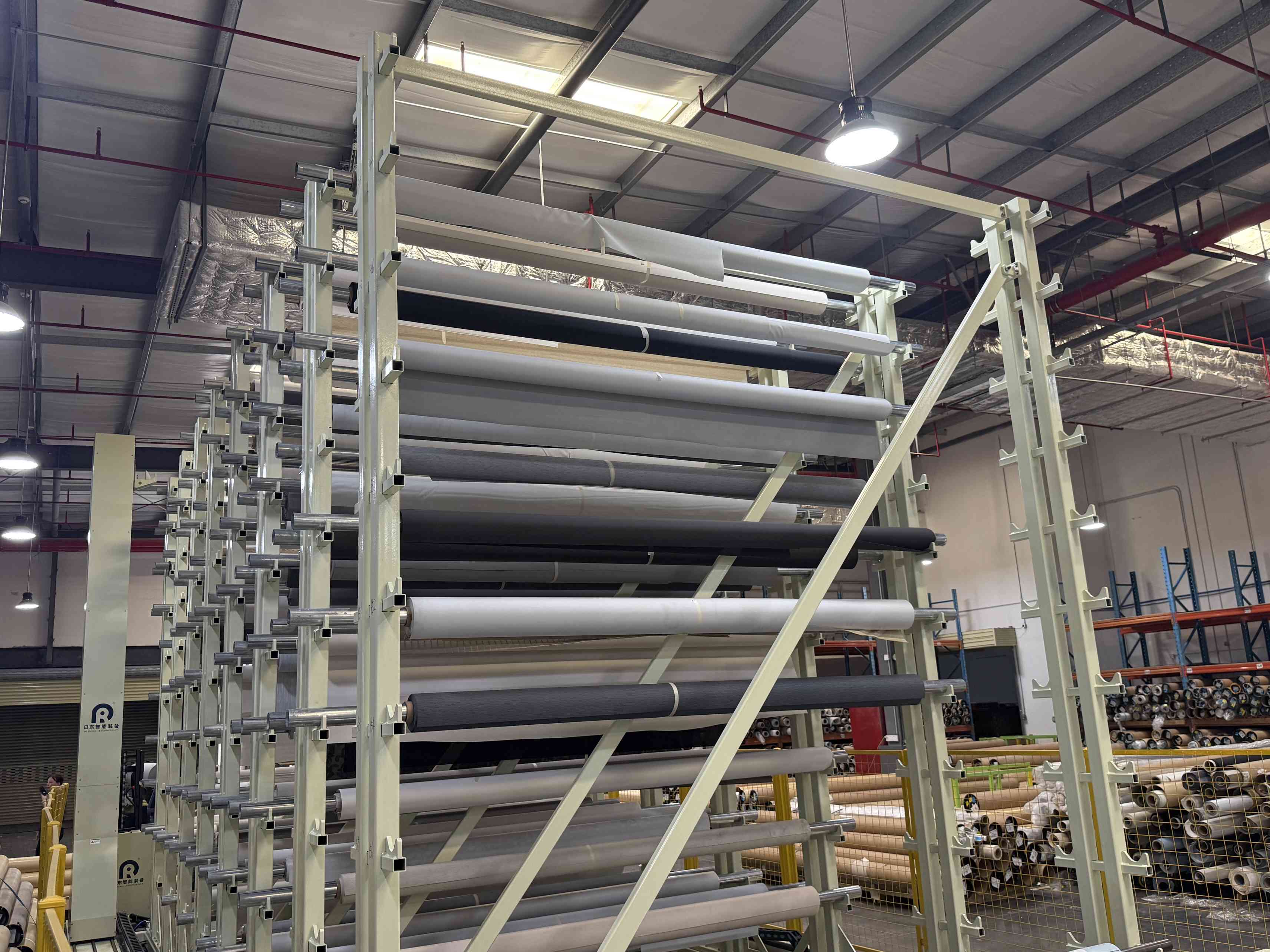
The system is essentially a motorized vertical carousel optimized for fabric rolls. Each roll sits in a dedicated cradle with a unique ID. When an operator needs roll #47 — say, 2.8-meter grey PVC mesh for a batch of balcony screens — they select it on the control terminal. The system rotates the carousel, retrieves the correct roll, and delivers it to the pickup bay. Total retrieval time: under 30 seconds.
From there, the roll moves to the adjacent cutting station. Here's where the integration gets interesting.
The storage system runs on RIDONG's proprietary control software, which connects directly to ROLLERGY's ERP system through a standard API. Here's what that means in practice:
- When a production order is created in the ERP, the storage system automatically checks which rolls have enough fabric to fulfill it.
- If roll #47 has 85 meters remaining and the order needs 72 meters, the system reserves that roll and flags it for retrieval.
- After cutting, the system updates the remaining fabric length in real time. No manual measurement. No guesswork. The ERP knows exactly how much is left on every roll.
This might sound simple, but for a factory running 160 rolls across multiple production lines, it eliminates about two hours of manual inventory checks every single day.
The storage system doesn't just feed rolls to a human operator. It integrates directly with ROLLERGY's fully automatic cutting table. Here's the full workflow:
1. Storage — Rolls are loaded into the system, scanned, and their fabric type, width, and initial length are logged.
2. Retrieval — An order comes through the ERP. The system identifies the matching roll and retrieves it.
3. Dispensing — The roll is positioned at the cutting station's feed end. The system controls fabric tension during unrolling to prevent stretching or misalignment.
4. Cutting — The automatic cutting table executes the programmed cut pattern. For zip screen panels, this typically means multiple parallel cuts at precise widths.
5. Offloading — Cut panels are automatically stacked and sorted by order number. The operator confirms the batch and moves the finished stack to the next station.
6. Data Update — The system sends the used fabric length back to the ERP. Remaining inventory updates instantly. If a roll drops below a minimum threshold, the system triggers a reorder alert.
All six steps happen with one operator at the control terminal. The cutting station operator who used to walk back and forth to the storage shelves now stays at the machine and manages the entire flow from a touchscreen.
The software dashboard shows, at a glance:
- Current inventory: how many rolls, which SKUs, remaining length on each
- Active orders: which roll is assigned to which production batch
- Usage history: fabric consumption by day, week, and SKU
- Low-stock alerts: automatic notifications when a roll drops below a user-defined threshold
- System health: motor runtime, maintenance reminders, error logs
The plant manager checks this dashboard on a tablet from his office. The production supervisor has it on a wall-mounted display at the workshop entrance. No more walking the floor with a notepad.
A quick background for context.
Dongguan Ridong Intelligent Equipment Co., Ltd. designs and manufactures sunshade industry machinery — curtain sewing machines, roller blind equipment, zip screen welding machines, ultrasonic cutting tables, and intelligent storage systems. 18+ years in the business. Machines in over 100 countries.
ROLLERGY (Guangzhou Roujing Sunshade Energy-Saving Technology Co., Ltd.) is the zip screen manufacturing division of Hande Group, one of South China's largest sunshade product conglomerates. ROLLERGY specializes in high-end exterior shading solutions for the Chinese domestic market and export to Southeast Asia.
Both companies are members of the Greater Bay Area Sunshade Alliance — an industry coalition of Guangdong-based sunshade manufacturers and equipment suppliers. This project happened partly because we speak the same industry language. When ROLLERGY described their storage bottleneck, our engineering team understood it immediately because we'd seen the same pattern in factories across Europe, Australia, and the Americas.
That's the value of an industry alliance: shared knowledge shortens the distance between problem and solution.
ROLLERGY's production manager shared these numbers with us three months after the system went live:
The plant manager put it best when he told us: "The storage system paid for itself in labor savings alone within eight months. The fabric waste reduction was a bonus I hadn't even budgeted for."
If you're running a zip screen factory — or any fabric-based production line — and you're still doing manual roll storage, here's the uncomfortable math:
One operator earning a standard wage spends roughly 15% of their shift walking to and from storage shelves. In an eight-hour day, that's 72 minutes of walking. Over a month, that's 24 hours. Over a year, nearly 300 hours — almost two months of their annual working time. And that's one operator. Most factories have two or three people doing this.
An automated storage system doesn't replace the operator. It releases them to do higher-value work — running the cutting station, doing quality checks, supervising multiple machines. The operator's skill and judgment stay on the factory floor. The walking goes away.
Interested in what an intelligent fabric storage system could do for your production line? Tell us your roll count, your typical fabric widths, and whether you need ERP or cutting line integration. We'll map out a configuration and give you real payback numbers


 EN
EN